
Last updated September 10, 2026
Level 1 sweep and inspection to the NFPA 211 annual standard - flue, crown, cap, and flashing checked and photographed
Chimney sweep logs do not sweep chimneys. They loosen some creosote - which then falls where a brush and vacuum still have to collect it.
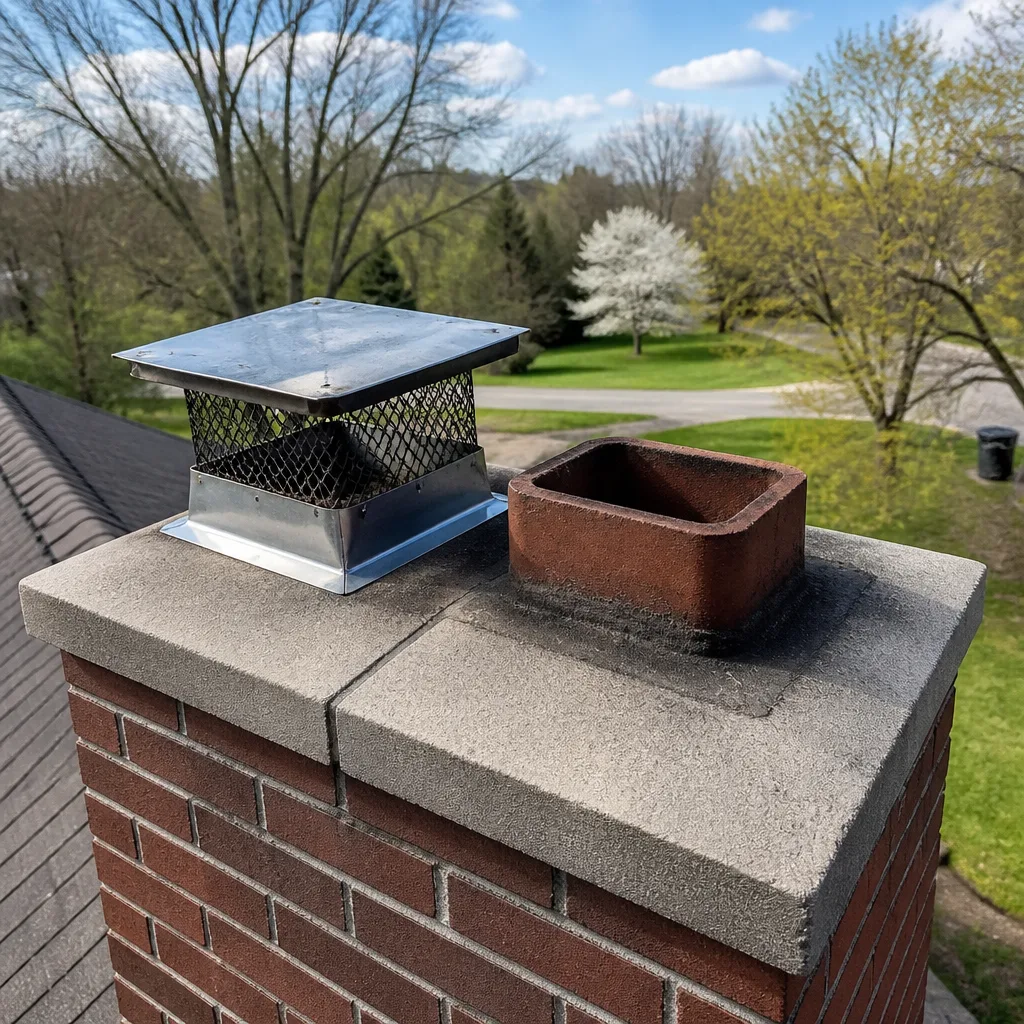
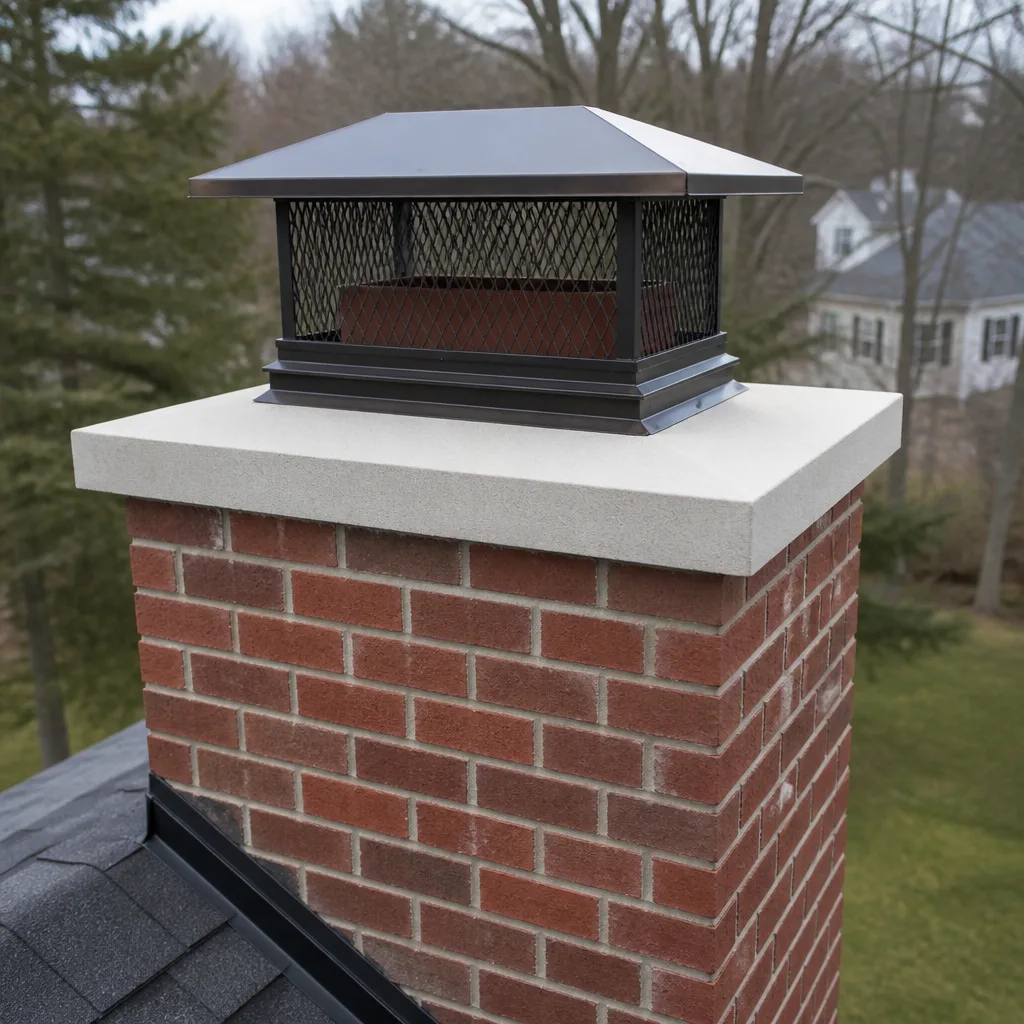
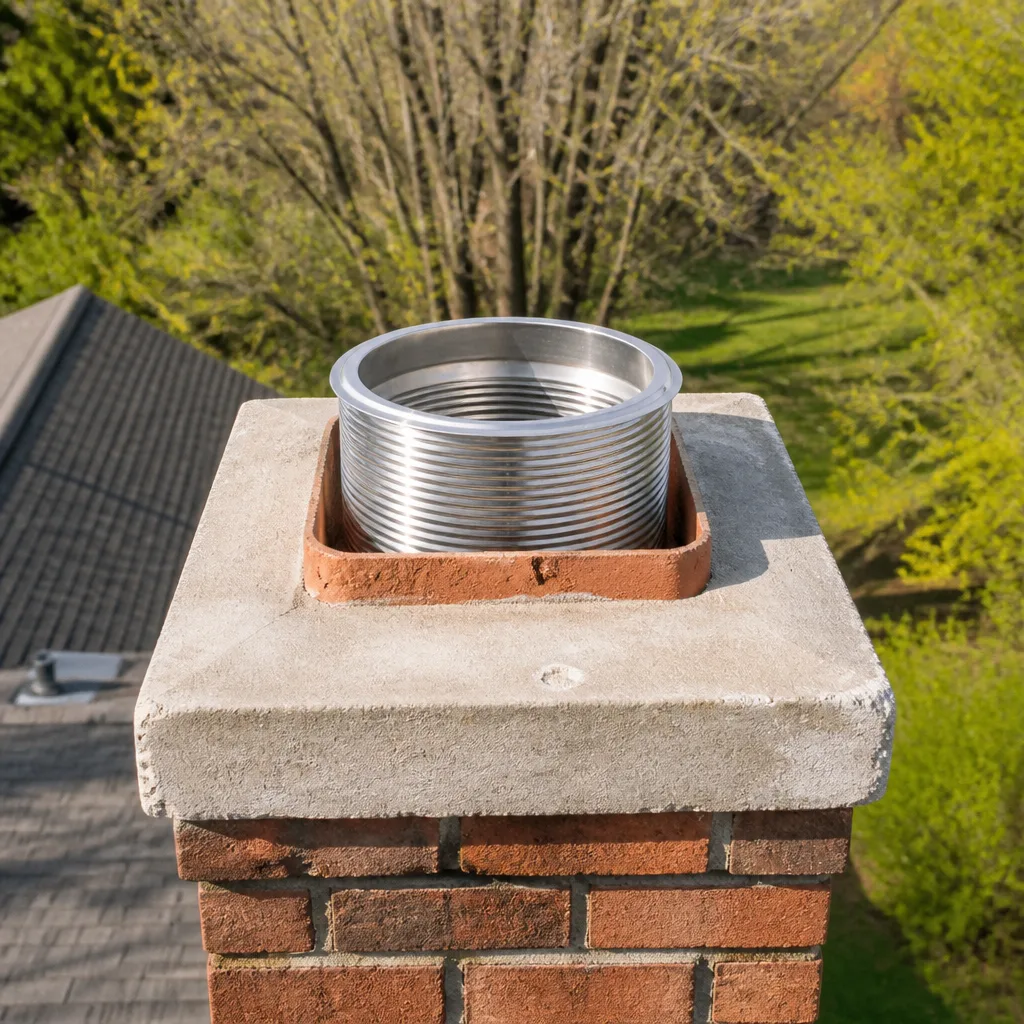
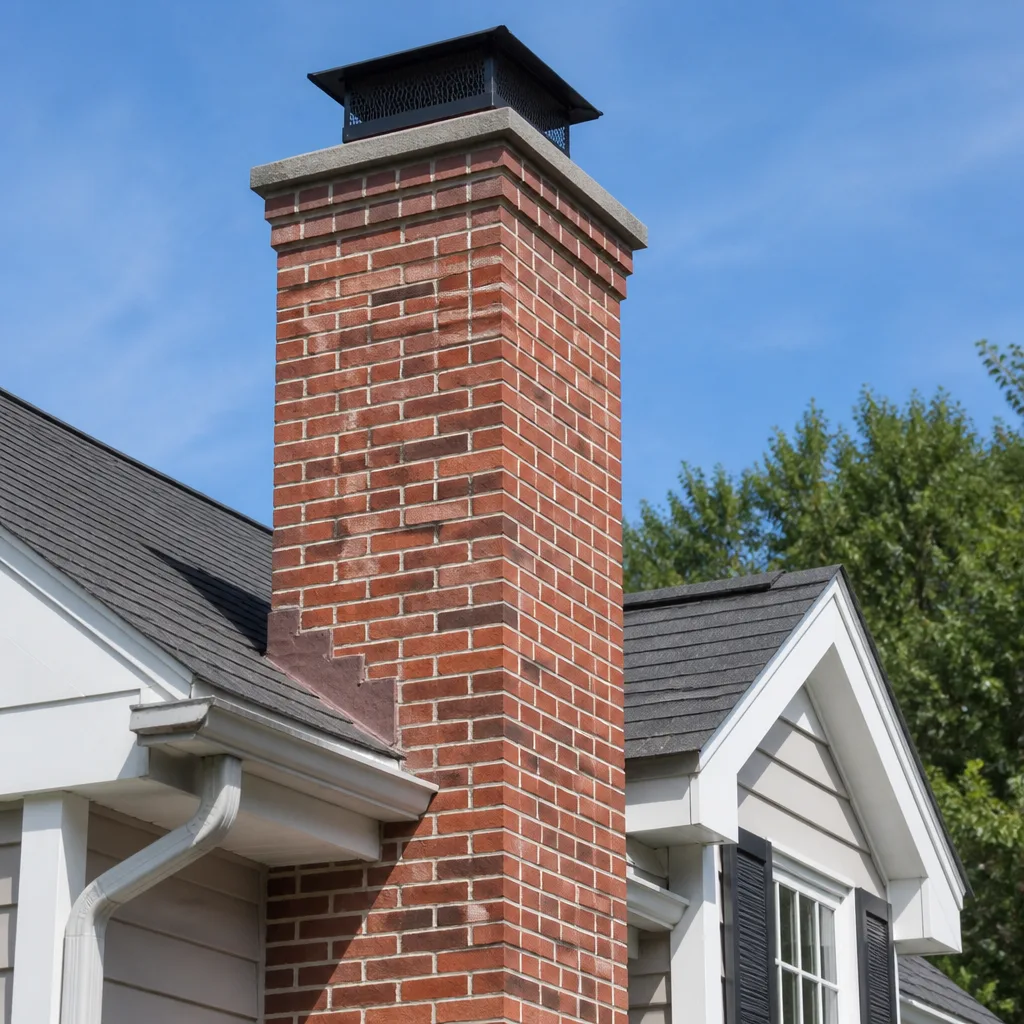
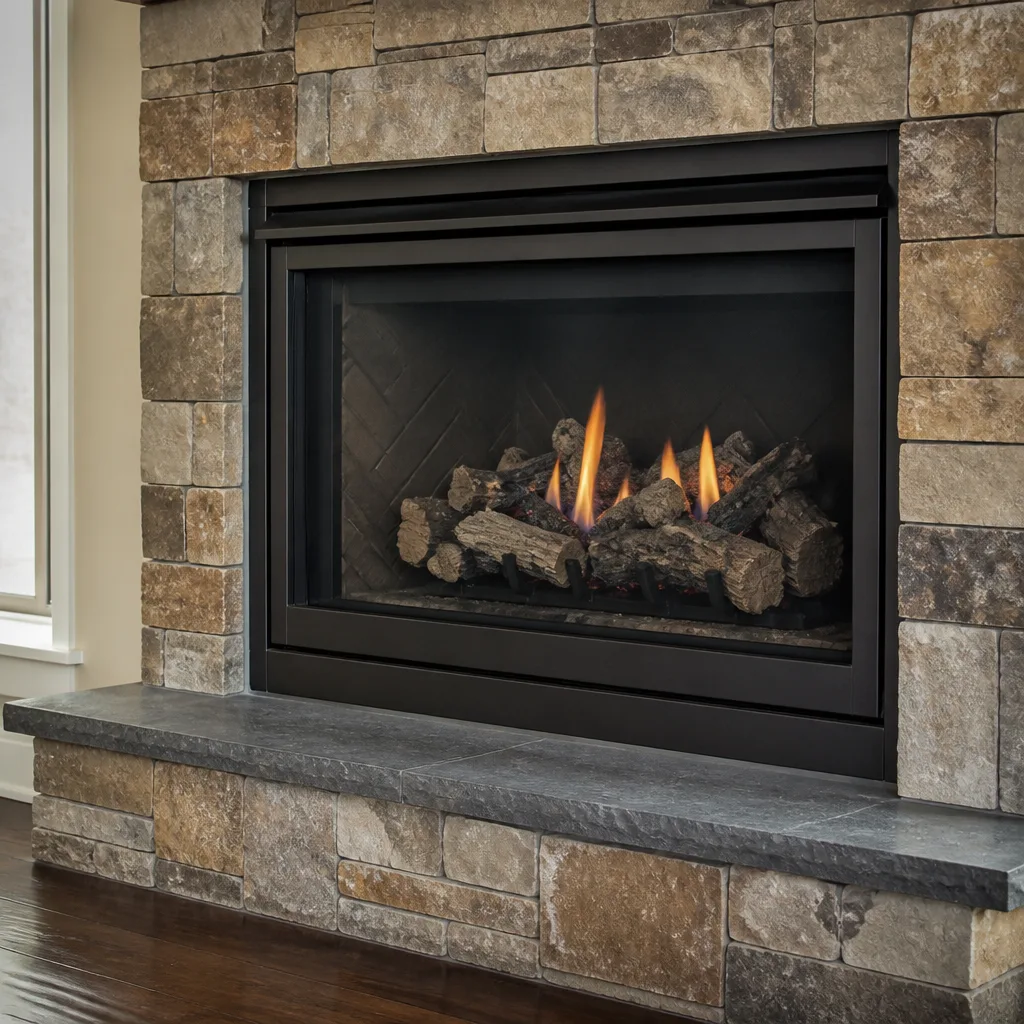
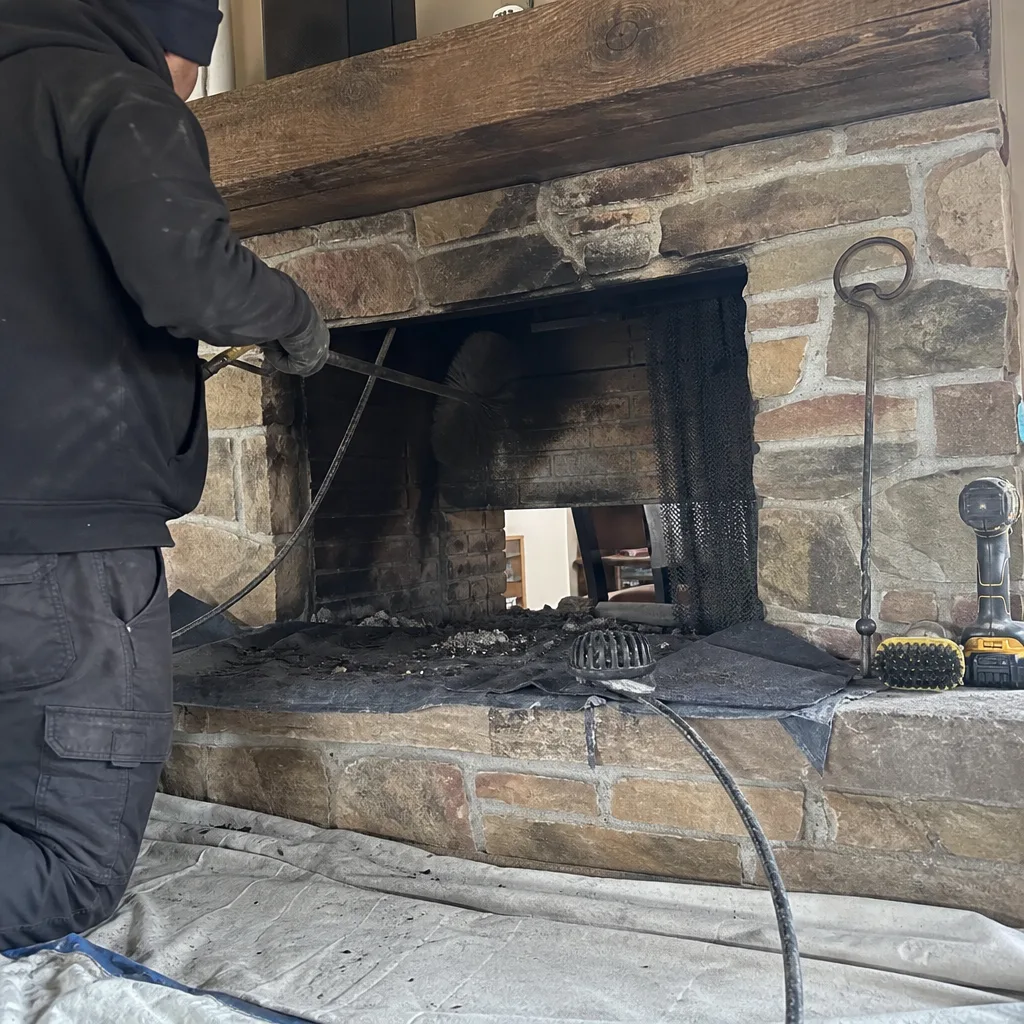 Before
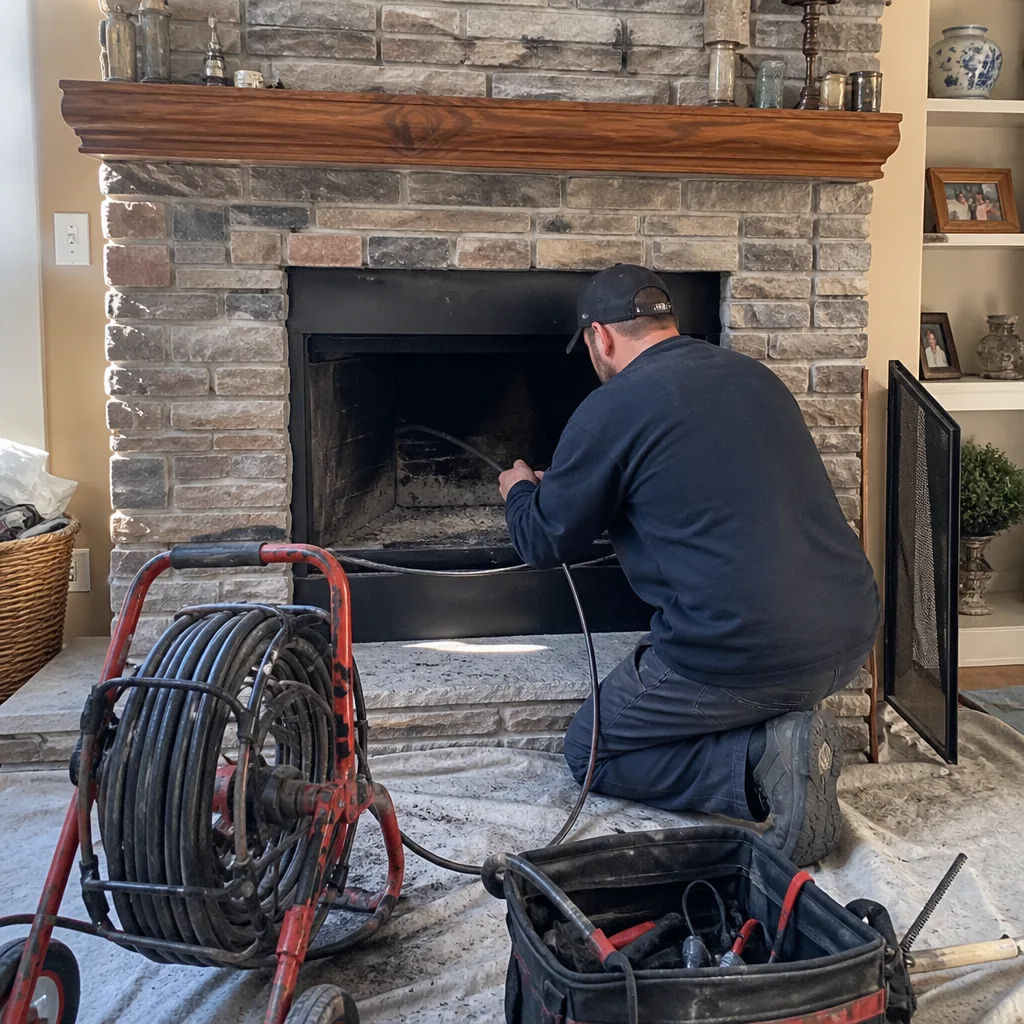 After
After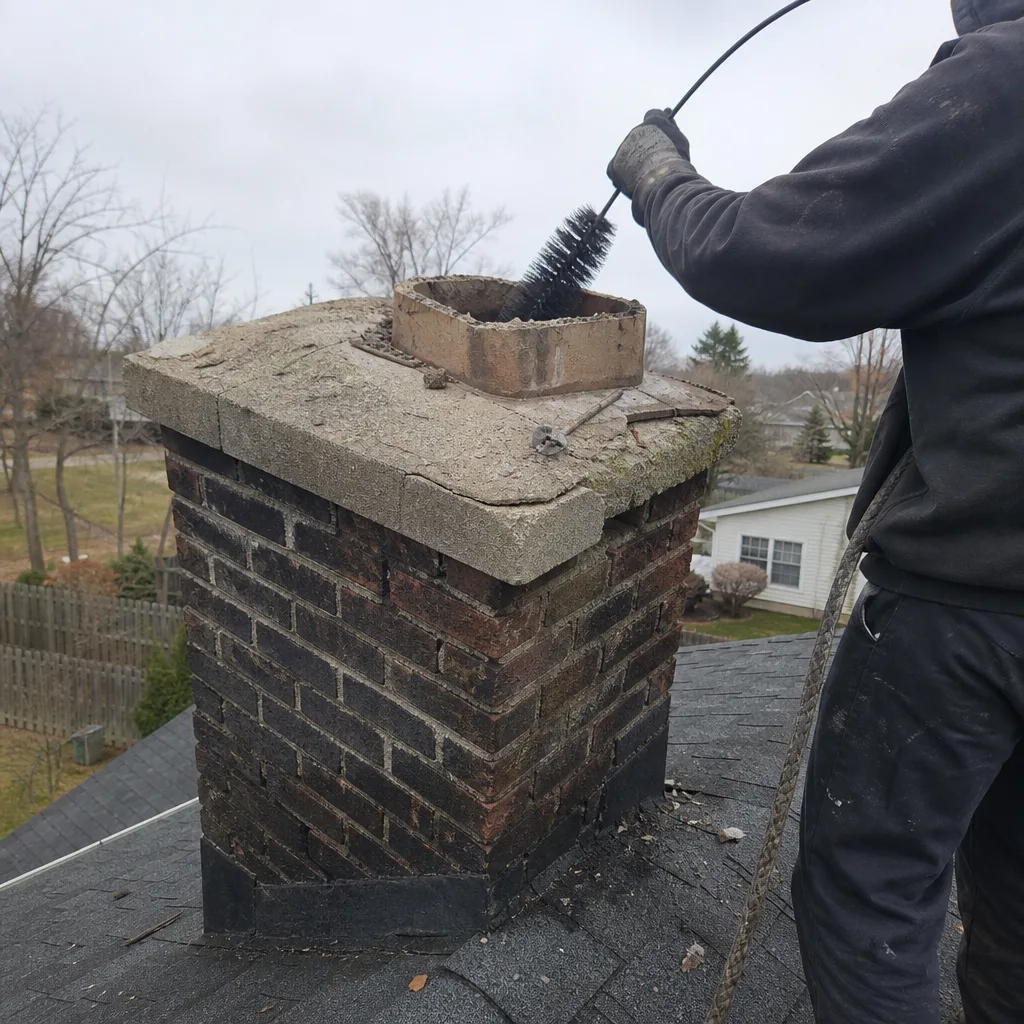 Before
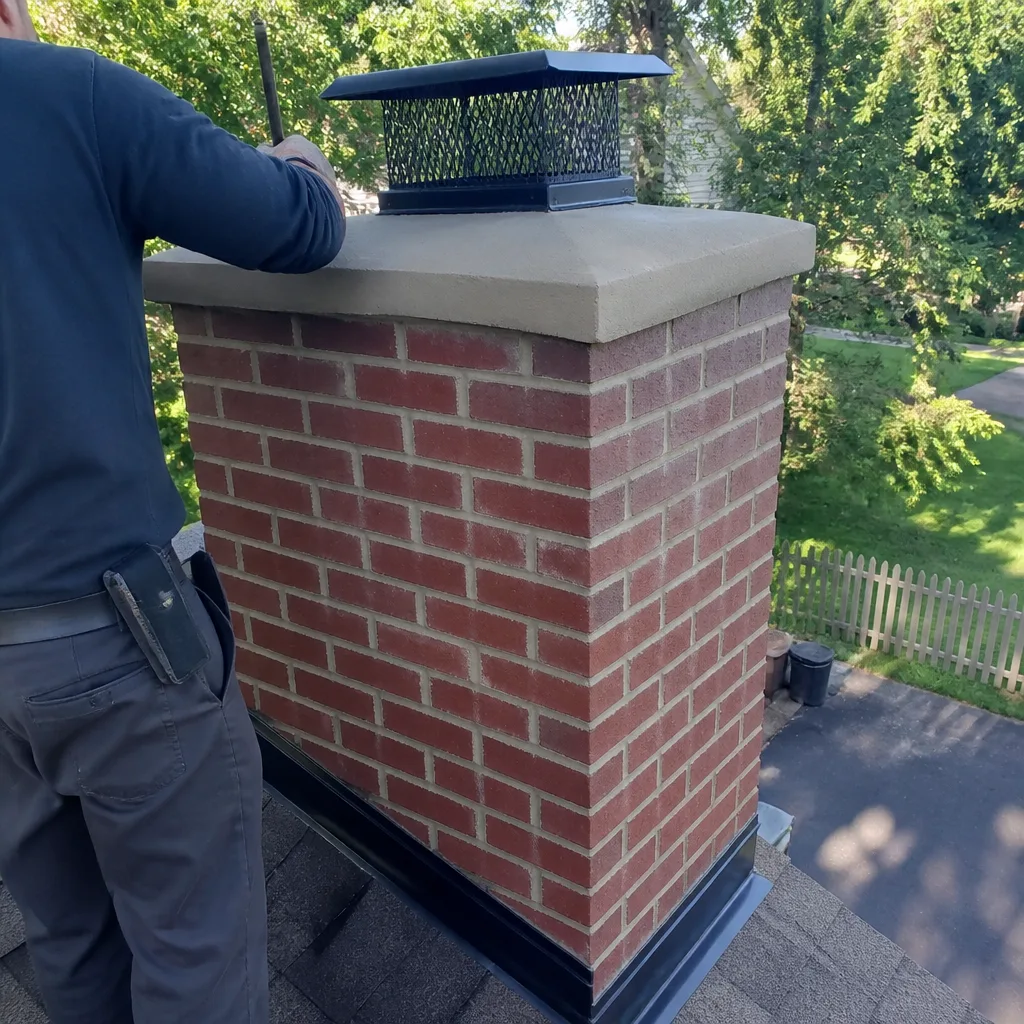 After
After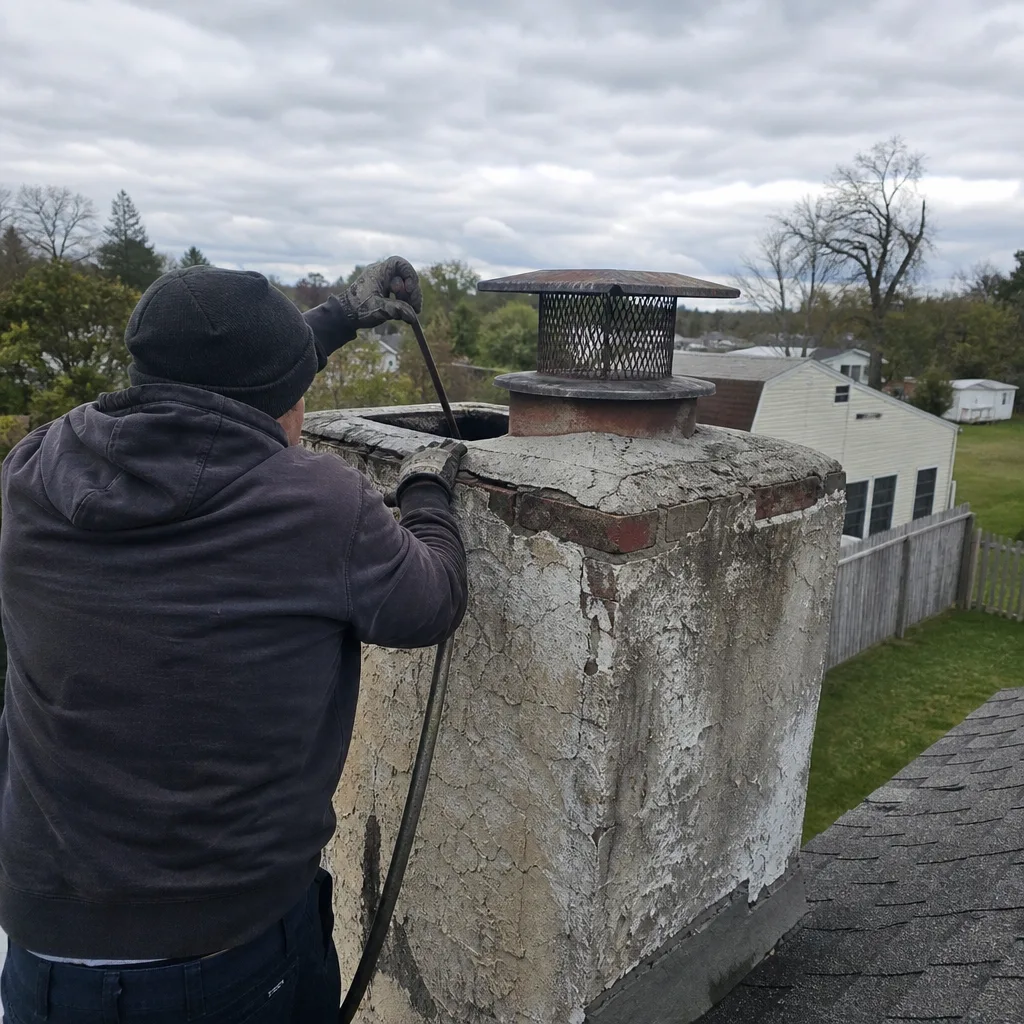 Before
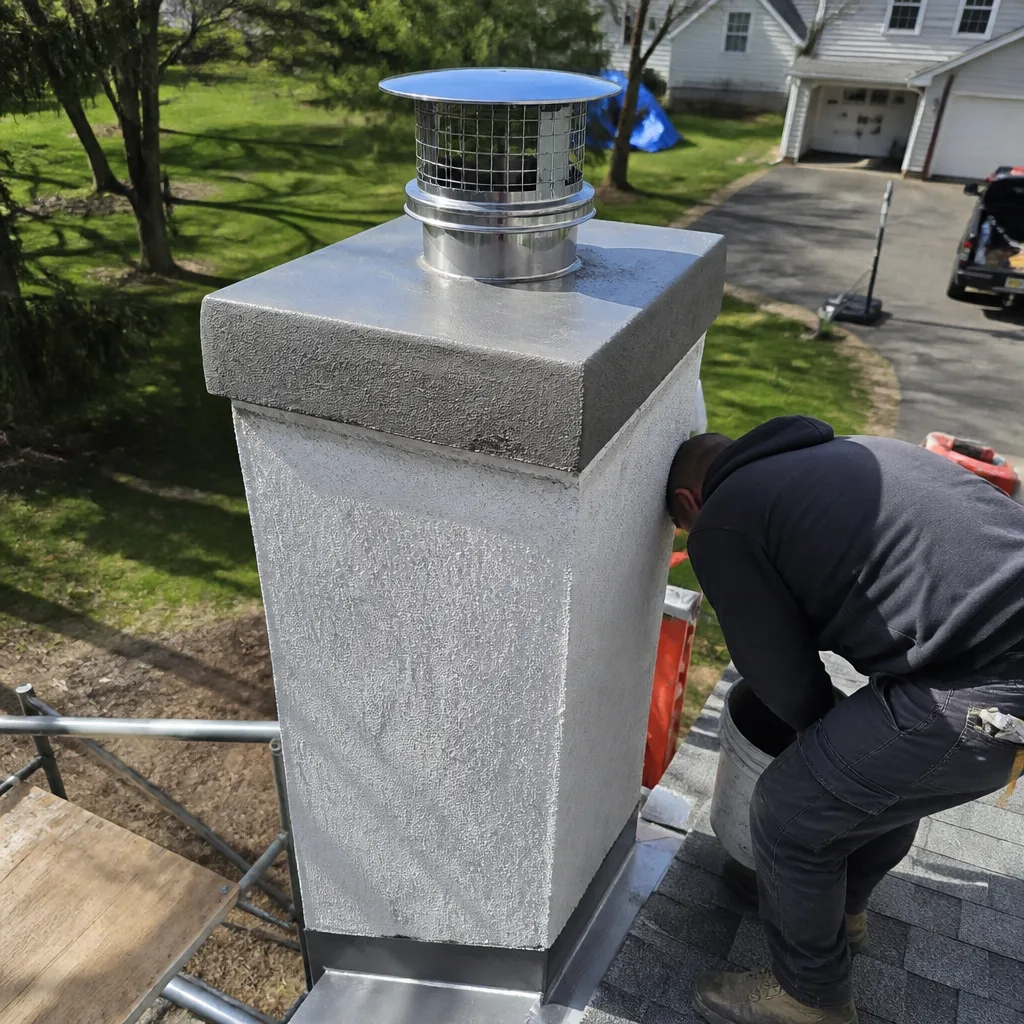 After
AfterHow to Hire a Chimney Cleaning Contractor in Quakertown: A Step-by-Step Guide
Pennsylvania logged more chimney-related complaints per capita to the Better Business Bureau during 2022 and 2023 than almost every other home-service category in the state. Nearly all of them started the same way: a low phone quote from a company the homeowner couldn’t locate afterward. No street address. No license number on file. No one who would answer a call once the bill was handed over. If you live in Quakertown, you’ve probably had one of these flyers stuck in your storm door. This guide walks you through exactly how to separate a real sweep from a seasonal opportunist before anyone sets a ladder against your house, and points you to more guides & resources for keeping your home safe year-round.
Quick Answer
Hiring a chimney cleaning contractor in Quakertown comes down to three verifiable facts: proof of liability insurance, proof of certification or equivalent documented training, and a physical address you can drive past. Ask for all three in writing before work begins, get a written estimate with a line-item breakdown, and refuse any quote that changed between the phone call and the doorstep. A legitimate sweep hands you proof without hesitation and stands behind the work in writing.
Table of Contents
- The Three Credentials That Actually Matter in Pennsylvania
- How to Verify a Sweep Before Anyone Climbs Your Roof
- Six Interview Questions That Reveal Who You’re Actually Dealing With
- How to Read a Written Estimate for Red Flags
- Why ‘We’re in the Area This Week’ Deserves Extra Scrutiny
- What a Legitimate Sweep Hands You Before Leaving the Driveway
- The Hiring Checklist: Step-by-Step from Search to Signed Estimate
The Three Credentials That Actually Matter in Pennsylvania
Walk into any hardware store in Quakertown and ask about chimney sweeps and you’ll hear a dozen different opinions about what makes one legitimate. Strip it down and there are three things that actually matter in this state. Everything else is decoration.
1. CSIA certification. The Chimney Safety Institute of America is the national standard for chimney sweeps. A certified sweep has passed written exams on fire codes, clearances, and the mechanics of how flue systems actually work. The certification is renewed every three years through continuing education. Ask for the sweep’s CSIA number and verify it on the CSIA website. It takes ninety seconds. In Quakertown’s older housing stock, where flues were built under codes that no longer exist, this training is the difference between a sweep who recognizes a deteriorating terra cotta liner and one who just runs a brush up and calls it done. For a full maintenance calendar, see our Seasonal Chimney Cleaning Care for Quakertown: Year-Round Homeowner’s Guide.
2. Liability insurance with a named certificate. This one is non-negotiable, and it’s where most homeowner horror stories start. Anyone can say “we’re insured.” What you want is a certificate of liability insurance with your name and address printed on it as the certificate holder. That document is issued directly by the insurance company, not typed up in a home office. If a worker falls off your roof or a chimney fire starts because creosote was left behind, this is the paper that protects you. A sweep who hesitates when you ask for a certificate is a sweep you don’t want on your property. Wendell Pike, the owner at Top Hat Chimney, has been handing these certificates to Quakertown homeowners since 1999 without being asked twice.
3. State contractor registration. Pennsylvania requires home improvement contractors to register with the Office of Attorney General. The registration number should appear on every estimate, invoice, and piece of advertising. You can verify that number on the Attorney General’s website in under a minute. It tells you the contractor is not banned from doing business in the state and has maintained the required insurance. A sweep operating without a PA registration number is operating outside the law, full stop.
There’s a fourth thing worth mentioning, though it’s not a credential on paper: a published street address. Not a PO box. A real building in a real town. Every contractor in Quakertown who has been serving the area for decades has an address that shows up on a map. The ones who don’t are working out of a truck and a burner phone. Ask yourself whether you want that person on your roof.
Here’s the bottom-line version for Quakertown homeowners. Certified. Insured with a named certificate. State-registered. Street address. If all four check out, you’re dealing with a professional operation. If any one of them wobbles, walk away. It’s that simple.
How to Verify a Sweep Before Anyone Climbs Your Roof
Credentials are only as good as your willingness to check them. A printed logo on an estimate means nothing if the certification behind it expired in 2019 or belongs to someone else entirely. The good news: verification takes less than fifteen minutes, and you can do all of it from your kitchen table in Quakertown before the sweep ever pulls into your driveway.
Step 1: Run the CSIA number.
Go to the CSIA website and use the “Find a Certified Sweep” tool. Type in the sweep’s name or their certification number. The database tells you whether the certification is current. If the sweep can’t produce a CSIA number at all, that’s your first warning sign. Not every good sweep carries CSIA certification, but every certified sweep will tell you their number without pause.
Step 2: Verify the PA registration number.
The Pennsylvania Attorney General’s Office maintains a searchable database of registered home improvement contractors. Enter the registration number printed on the estimate or business card. The database confirms the registration is active and shows the legal business name and address. Pay attention to the name. If the registration belongs to “Bob Smith” but the estimate says “Smith Chimney Pros LLC,” and those names don’t connect, you’ve found a problem. A legitimate operation’s paperwork lines up.
Step 3: Search the local court records.
Bucks County court records are public and searchable. Run the company name and the owner’s name through the civil docket. You’re looking for patterns: multiple small-claims filings, repeated mechanic’s lien complaints, a trail of unhappy customers chasing the same company. One lawsuit over twenty-five years doesn’t necessarily mean anything. Half a dozen in the last three years tells you everything you need to know. This search takes ten minutes and it is the single most overlooked step in hiring any home contractor in Quakertown.
Step 4: Drive past the address.
You read that right. If the company claims to be local to Quakertown or the surrounding Bucks County area, drive past their published address. A real local operation has a real shop or office. You don’t need to go inside. You just need to confirm the building exists and looks like a working business, not an empty lot or a Mailboxes Etc. storefront. This is the advantage of hiring local: you can put your own eyes on the operation. You can’t do that with a call center in another state.
Step 5: Ask for the certificate of insurance.
Call the office and say you need a certificate of liability insurance naming you as the certificate holder. This is a standard request for any homeowner about to invite contractors onto their property. The company contacts their insurance agent, who issues the certificate, usually within one business day. The document lists the policy number, coverage limits, and the insurance company’s name. You can call the insurance company to confirm the policy is active. This is not paranoid. This is what careful hiring looks like.
If a sweep in Quakertown balks at any of these five steps, that’s not a red flag. That’s the whole flagpole. A professional operation expects to be checked. A professional operation wants you to check. The ones who get defensive are the ones with something to hide.
Six Interview Questions That Reveal Who You’re Actually Dealing With
Once the credentials check out, you need to have a conversation. Not a five-minute phone call that ends with “we’ll be there Tuesday.” A real conversation about your specific chimney, your specific fireplace, and what the sweep actually plans to do. These six questions cut straight through. The answers reveal in under fifteen minutes whether you’re hiring someone who has done this work a thousand times or someone reading from a script.
Question 1: “How long have you been working specifically in Quakertown?”
Comfortable answer: A specific number of years, with mention of nearby communities like Richlandtown, Coopersburg, or Trumbauersville. A sweep who has worked this area for decades knows that Quakertown homes range from 1800s stone farmhouses with original brick flues to 1990s developments with prefab metal chimneys. That range matters. Different flue systems require different tools and different techniques.
Walk-away answer: “We’ve been serving your area for years” with no specificity. Or an answer that avoids saying Quakertown, Bucks County, or any actual town name. National chains rotate crews through unfamiliar territory. The guy on your roof learns your chimney’s quirks in real time.
Question 2: “What tools do you use for a standard cleaning?”
Comfortable answer: A description of rotary brushes, rod systems, and a high-powered HEPA vacuum that runs throughout the cleaning. The sweep should mention setting up drop cloths and protecting your floors. Specific tools signal real experience.
Walk-away answer: “Standard professional equipment.” That’s not an answer. That’s a placeholder. If the person on the phone can’t describe their own tools, the person on the phone has never used them.
Question 3: “Will I get to see the condition of my flue?”
Comfortable answer: “Yes. We run a camera up the flue and you’ll see the footage with your own eyes.” A legitimate sweep documents the condition of your chimney. Camera inspection is standard practice in Quakertown these days, and the sweep should welcome your involvement. If a problem is found, you should see it before you’re asked to pay for a fix. The camera footage and a plain-English verdict, every time, no exceptions.
Walk-away answer: “We’ll let you know if anything needs attention.” You’re being asked to trust a report you can’t verify. A chimney is the one home system where the dangerous problems hide in the dark where you can’t see them. Any sweep who won’t show you the footage is either lazy, under-equipped, or planning to sell you a repair you don’t need.
Question 4: “What’s your procedure if you find a problem?”
Comfortable answer: “We’ll show you the camera footage, explain what we’re seeing in plain English, and give you a written estimate for the repair. You decide whether to proceed. If it can wait, we’ll tell you it can wait.” A sweep who tells you work can safely wait is a sweep who earns your trust. Not every crack in a flue tile is an emergency.
Walk-away answer: “We recommend fixing that immediately for safety reasons” delivered as a pressure pitch on the same visit. Sometimes the problem is urgent, yes. But an urgent problem should be documented on camera and explained in terms you understand. A sweep who pushes a same-day repair decision is acting like a salesman, not a technician.
Question 5: “Who’s actually coming to my house?”
Comfortable answer: A real name. “Wendell will be there” or “One of our regular crew members, you’ll get a call with the name and a real arrival window.” The person who quoted the job knows the person doing the job. They’re from the same operation.
Walk-away answer: “A certified technician” with no name, no photo, no identity. National operations sometimes subcontract to local independents. The contractor you hired on the phone is not the person who shows up, and that person may have no relationship with the company whose name is on your invoice. In Quakertown, ask for a name before the truck pulls up.
Question 6: “Do you have references I can call in the area?”
Comfortable answer: “Absolutely, here are three homeowners within twenty minutes of you.” A local operation has local references. Ask anyone on your street. You probably know someone who has used them. That’s the point of hiring local.
Walk-away answer: “We have hundreds of five-star reviews online.” Reviews can be bought, faked, or cherry-picked. A name and a phone number of a real Quakertown homeowner who will vouch for the work is a different level of proof. A professional who has served this community since 1999 has customers who will pick up the phone.
How to Read a Written Estimate for Red Flags
A written estimate is a contract in everything but signature. It tells you what the sweep plans to do, what it will cost, and how they handle surprises. Most homeowners in Quakertown skim the number at the bottom and ignore everything above it. That’s a mistake. The language in the estimate reveals more about the company than the price does.
Here’s what a legitimate chimney cleaning estimate should include, line by line:
- Scope of work: The specific services being performed. “Level 1 inspection and cleaning of one flue serving a wood-burning fireplace.” Not “chimney service.” If the scope is vague, the final bill will be negotiable, and not in your favor.
- Per-item pricing: Cleaning fee, inspection fee, disposal fee, any access fees. Each line item priced separately so you can see exactly what you’re paying for.
- Duration: An estimate of how long the job will take. A standard cleaning in Quakertown usually runs one to two hours.
- Materials and brands: If any parts need replacement, the estimate should name the specific product. DuraFlex liners. HeatShield resurfacing material. Famco caps. Brand names let you verify quality and price. If the estimate just says “new liner,” you can’t compare it to anything.
- Payment terms: When payment is due, what forms are accepted, and whether a deposit is required. A steep upfront deposit is a red flag in chimney work. Most legitimate cleaning jobs in this area require no deposit at all.
- Company information: Full legal business name, physical address, PA contractor registration number, and phone number. If any of these are missing, do not sign.
Now the red flags. These are the phrases that should make you put the estimate down and call someone else.
“Estimate subject to change upon inspection.” Translation: the number you’re reading is a floor, not a ceiling. The inspection will “discover” problems that need addressing at additional cost. A real sweep inspects first, then prices. Not the other way around.
“Additional charges may apply for difficult access.” Difficult access should be identified on the phone before the estimate is written. If your chimney is on a steep pitch or your roof is three stories up, the estimate should reflect that reality up front. A vague access clause is a blank check.
“We recommend a full chimney rebuild” on a first visit, for a chimney you’ve used without incident for years. Sometimes rebuilds are necessary. Quakertown’s older homes occasionally need major masonry work. But that recommendation should be backed by camera footage you’ve seen with your own eyes, and a second opinion should always be welcomed. Any company that pushes a multi-thousand-dollar rebuild and bristles at the idea of a second opinion is a company that doesn’t want you to compare prices.
“Today-only discount if you sign now.” A written estimate should be valid for at least two weeks. Pressure to sign before you can think, compare, or call a neighbor is the calling card of a high-pressure sales operation, not a chimney sweep. Top Hat Chimney’s number on the phone is the number on the invoice. No games, no pressure, no bait-and-switch pricing. That’s how it has worked in Quakertown since 1999.
One more thing worth saying: a legitimate estimate takes time to prepare. It should be detailed enough that a competing company could price the same scope of work line by line. If the estimate is one sentence and a number, you’re not getting an estimate. You’re getting a raffle ticket.
Why ‘We’re in the Area This Week’ Deserves Extra Scrutiny
Every spring and fall, the same postcards land in Quakertown mailboxes. A chimney cleaning special. A coupon. A “neighborhood discount” because the company is “already working on your street.” The pitch is built on urgency and convenience. The reality is often different.
Door-to-door and mass-mailer chimney operations follow a predictable pattern. They quote a low price to get a foot in the door. The “technician” who arrives is a salesman on commission. The “inspection” always finds problems, often serious ones. The follow-up repair quote runs into thousands. And the company’s physical address, if it exists at all, is two states away. When you call to complain, no one picks up. You’ve been burned, and the company has moved on to the next town.
This is not a hypothetical. The BBB complaints mentioned at the top of this guide follow this exact pattern over and over. Same script. Same results. Different town names.
The “we’re in the area” discount is the tell. A real, established contractor in Quakertown doesn’t need to be “in the area.” He lives here. His shop is here. His trucks are parked here every night. He doesn’t arrive for two weeks of discount work and then vanish. He’s at the hardware store. His kids go to school with your kids. You’ll see him at the Richlandtown Farmers Market. If you have a problem, he’s a local phone call away, not a toll-free number that rolls to voicemail.
Here’s a simple test. Before you take the “in the area” discount, ask one question: “What’s your physical address?” If the answer is a city in Delaware, Ohio, or the Poconos, the “local” discount isn’t local at all. It’s a traveling sales crew working through a database of addresses. The discount is the hook, and the repair quote is the real transaction.
Now consider the local alternative. Wendell Pike founded Top Hat Chimney in 1999. The company has been answering the phone, scheduling cleanings, and doing repairs in Quakertown and the surrounding Bucks County communities for over 29 years. The address is published. The license number is on every estimate. The phone is answered by a live person around the clock, and it may well be Wendell himself who picks up. That’s what local actually means.
What a Legitimate Sweep Hands You Before Leaving the Driveway
The job is done. The sweep packs up the truck. Before he leaves your Quakertown driveway, you should have a folder in your hand. If the sweep has nothing to give you except a receipt, the job isn’t finished. Proper documentation is the mark of a professional operation, and it protects you if something goes wrong three months from now.
Here’s what a legitimate sweep leaves behind after a cleaning or inspection:
- A written report of the chimney’s condition. Not a verbal summary. A written report describing what was found, what was cleaned, and any defects or concerns. The report should be detailed enough that another sweep could read it and understand exactly what’s in your flue.
- Camera inspection photos or footage. If a camera inspection was performed, you should receive still images or a link to review the footage. This is standard practice now. Any sweep who mentions a problem on the phone after the fact should be able to show you the image that backs it up.
- A receipt with line-item detail. The final invoice should match the estimate, line for line. If the price changed at any point, the change should be documented, explained, and approved by you in writing before the work continued.
- Warranty or guarantee information. Every job should carry some form of written guarantee. Top Hat Chimney backs every completed job with the 90-Day Done Right Promise, in writing, stamped on every single job. If the work is not right, one call brings the crew back at no additional cost. This is the kind of guarantee you want: specific, time-bound, and in writing.
- Before-and-after documentation of any repairs. If a liner was installed, a cap replaced, or a crown repaired, you should have photos of the before and after. This is your proof of work, and it will matter if you sell the house. Real estate transactions in Quakertown often require evidence of chimney maintenance, and good documentation saves you headaches at closing.
If a sweep hands you a credit card receipt and nothing else, you’ve just paid for a service with no proof it was done correctly. That’s a risk you don’t need to take. The documentation standard in this industry has risen over the last decade, and established local operations have kept up. The ones still working on a handshake and a verbal summary are the ones you’ll struggle to reach when something goes wrong.
The Hiring Checklist: Step-by-Step from Search to Signed Estimate
Here’s the entire process, condensed into a numbered checklist you can follow from your first Google search to the day the sweep arrives in Quakertown. Print it. Tape it to the fridge. Use it.
- Start with local searches, not national lead-gen sites. Search for “chimney cleaning Quakertown PA” and look for companies with a physical address in Bucks County or the immediate surrounding area. National directories and lead-generation websites are filled with middlemen who sell your information to the lowest bidder. Go direct to the company’s own website. A real local operation has a real website with a real address and a real phone number. Our Top Hat Chimney home page lists everything you need up front.
- Run the credential checks. CSIA certification number. PA contractor registration. Certificate of liability insurance naming you as certificate holder. All three verified before you agree to anything. This takes fifteen minutes and eliminates the worst actors immediately.
- Check the local court records. Bucks County civil docket. Search the company name and the owner’s name. Look for patterns of small claims filings or unresolved complaints. Ten minutes, free, and devastatingly effective at filtering out repeat offenders.
- Call and ask the six interview questions. You know them now. How long in Quakertown. What tools. Camera inspection or not. Procedure for problems. Who’s coming. References. The answers tell you who you’re really dealing with.
- Request a written estimate. Line items. Specific scope. Brand names for any parts. No vague language. No “subject to change” clauses. The estimate should look like a professional document, not a text message.
- Compare estimates side by side. Get at least two written estimates for anything beyond a standard cleaning. Compare line by line. If one company’s price is dramatically lower, look for what’s missing. A lower price usually means a shorter scope, not a better deal. For chimney cleaning and sweep services in Quakertown, a fair price is a fair price, and wildly low estimates should make you suspicious.
- Verify the warranty in writing. Ask what guarantee comes with the work. If the answer is “we stand behind our work” without a specific timeframe or remedy, push harder. A written guarantee has a duration and a process. The 90-Day Done Right Promise is the standard to measure against.
- Confirm the arrival plan. Real arrival window. Name of the person coming. Phone number to reach them if something changes. If you’re getting “sometime between 8 and 5,” ask for better. Background-checked, uniformed technicians who give you a real arrival window and call if it slips. That’s the standard.
- Review all paperwork after the job. Written report. Camera footage. Receipt matching the estimate. Warranty documentation. All in hand before the truck leaves your driveway.
- Schedule the next cleaning before you forget. Once a year, burn or no burn. Chimneys break in the off-season too. A good sweep will schedule your next visit before leaving. That’s how established operations build a book of business in Quakertown. You should never have to start this hiring process from scratch every year.
Common Mistakes to Avoid
- Trusting the lowest phone quote. A low quote over the phone is a marketing tool, not an estimate. The real price gets named after the “inspection” reveals “serious problems.” In Quakertown, where chimney work is seasonal and competitive, the companies that undercut everyone else on the phone are often the ones who make it up on the back end.
- Skipping the insurance certificate. You cannot afford to be wrong about this. If an uninsured worker falls off your roof, your homeowner’s policy is on the hook. The insurance certificate is the single most important document in this entire hiring process. Never skip it.
- Hiring a subcontractor without knowing it. The company that answers the phone is legally responsible for the work. If a subcontractor does the actual cleaning and something goes wrong, you now have two parties pointing fingers at each other. Ask who is doing the work, and get it in writing.
- Accepting “everything looks fine” without documentation. Fine means nothing without a report, camera footage, and a receipt. “Fine” is the word used by people who didn’t actually look, or who looked and don’t want to tell you what they saw. Demand paperwork.
- Falling for pressure tactics on repairs. “This needs to be fixed today or your house could burn down.” True chimney emergencies exist. But they’re rare. A professional shows you the camera footage, explains the risk in plain English, and gives you time to decide. A high-pressure pitch is a sales technique, not a safety briefing.
- Hiring a generalist handyman for chimney work. Your neighbor’s cousin who “knows a lot about chimneys” is not a chimney sweep. Chimney systems involve clearances, drafting physics, and fire codes that a generalist doesn’t know exist. This is skilled, specific work. In Quakertown’s older homes, the margin for error is small.
- Forgetting to verify the guarantee. “We stand behind our work” is language, not a guarantee. A real guarantee names a specific period, a specific remedy, and who to call. If it’s not in writing, it doesn’t exist.
When to Call a Professional
Some chimney work is obviously professional territory. If you see crumbling mortar joints, a leaning chimney stack, water stains on the ceiling near the fireplace, or smoke backing up into the room when you burn, stop using the fireplace and call a sweep immediately. Any sign of animals nesting, visible cracks in the flue, or a chimney cap that has blown off in a storm also warrants a professional inspection before you light another fire.
For everything else, the annual cleaning is the professional check-up that catches problems before they become emergencies. First-degree creosote is a brush job. Third-degree is a glaze that requires aggressive mechanical removal. Catch it early and you’re paying for a cleaning. Catch it late and you’re paying for a liner. Once a year, burn or no burn, is the cheapest insurance you’ll ever buy for your home.
Top Hat Chimney offers free estimates in Quakertown. Call (484) 603-6713 to schedule a cleaning or to ask about anything you’ve read in this guide. A live person answers around the clock.
Frequently Asked Questions
Standard chimney cleaning and Level 1 inspection in the Quakertown area typically runs between $180 and $350 depending on the size of the flue, accessibility, and whether the chimney has been recently maintained. Homes with third-story roof access or steep pitches fall on the higher end. Additional services like a camera inspection, cap replacement, or creosote treatment are priced separately. Call (484) 603-6713 for an exact quote, with no trip charge inside the county and no obligation.
Yes. The National Fire Protection Association recommends annual inspection and cleaning as needed, and the specific conditions in Pennsylvania make the annual schedule the right one for most Quakertown homes. Wood-burning fireplaces build creosote with every fire, and creosote is the fuel for chimney fires. Even if you only burn occasionally, animals, debris, and water damage can compromise the flue during the seasons you’re not using it. Once a year, burn or no burn. Chimneys break in the off-season too.
Missing one season of cleaning usually means a heavier creosote buildup that takes longer to remove and costs more to address. Missing several seasons results in hardened, glazed creosote that can require chemical treatment or mechanical removal, and it significantly increases the risk of a chimney fire. If water has been entering through a damaged cap or crown, skipped years can turn a minor flashing leak into a full chimney repair in Quakertown requiring masonry work. The cleaning is always cheaper than the repair.
Use the Pennsylvania Attorney General’s online contractor registration lookup. Enter the registration number printed on the sweep’s estimate or business card. The database confirms the registration is active and shows the legal business name and address. You should also verify CSIA certification through the Chimney Safety Institute of America’s website. Top Hat Chimney’s license number appears on every estimate and invoice, and it has been verifiable since 1999.
A thorough sweep inspects the entire system: the firebox, damper, smoke chamber, flue, chimney cap, and crown. The cleaning covers the flue, but the inspection covers everything the fire touches and everything the weather touches. That’s why fireplace services in Quakertown go hand in hand with the sweep. If your damper is stuck, your firebox bricks are cracked, or your cap has rusted through, a proper inspection catches it.
They protect you in different ways. CSIA certification proves the sweep has passed national exams on chimney systems, fire codes, and proper cleaning techniques. Pennsylvania contractor registration proves the company is legally authorized to do business in the state and carries the required insurance. A responsible operation has both. The certification protects the quality of the work. The registration protects you financially if something goes wrong. Ask for both, every time.
The Bottom Line
Hiring a chimney sweep in Quakertown is not hard once you know what to look for. Verify the credentials. Ask the six questions. Read the estimate line by line. Demand documentation after the work is done. These steps eliminate the seasonal opportunists and leave you with the professionals: local operations with published addresses, verifiable licenses, and written guarantees that actually mean something.
The right sweep is someone who has been doing this work in your community for years, who puts his name on every job, and who answers the phone when you call with a question three months later. That’s the standard. Top Hat Chimney has been serving Quakertown and the surrounding Bucks County communities since 1999. Wendell and his crew know the chimneys in this area because they’ve been inside them. Call (484) 603-6713 for a free estimate, no pressure, no games. The number you hear on the phone is the number on the invoice.
Written by Wendell Pike, Owner at Top Hat Chimney, serving Quakertown since 1999.