
Level 1 sweep and inspection to the NFPA 211 annual standard - flue, crown, cap, and flashing checked and photographed
Chimney sweep logs do not sweep chimneys. They loosen some creosote - which then falls where a brush and vacuum still have to collect it.
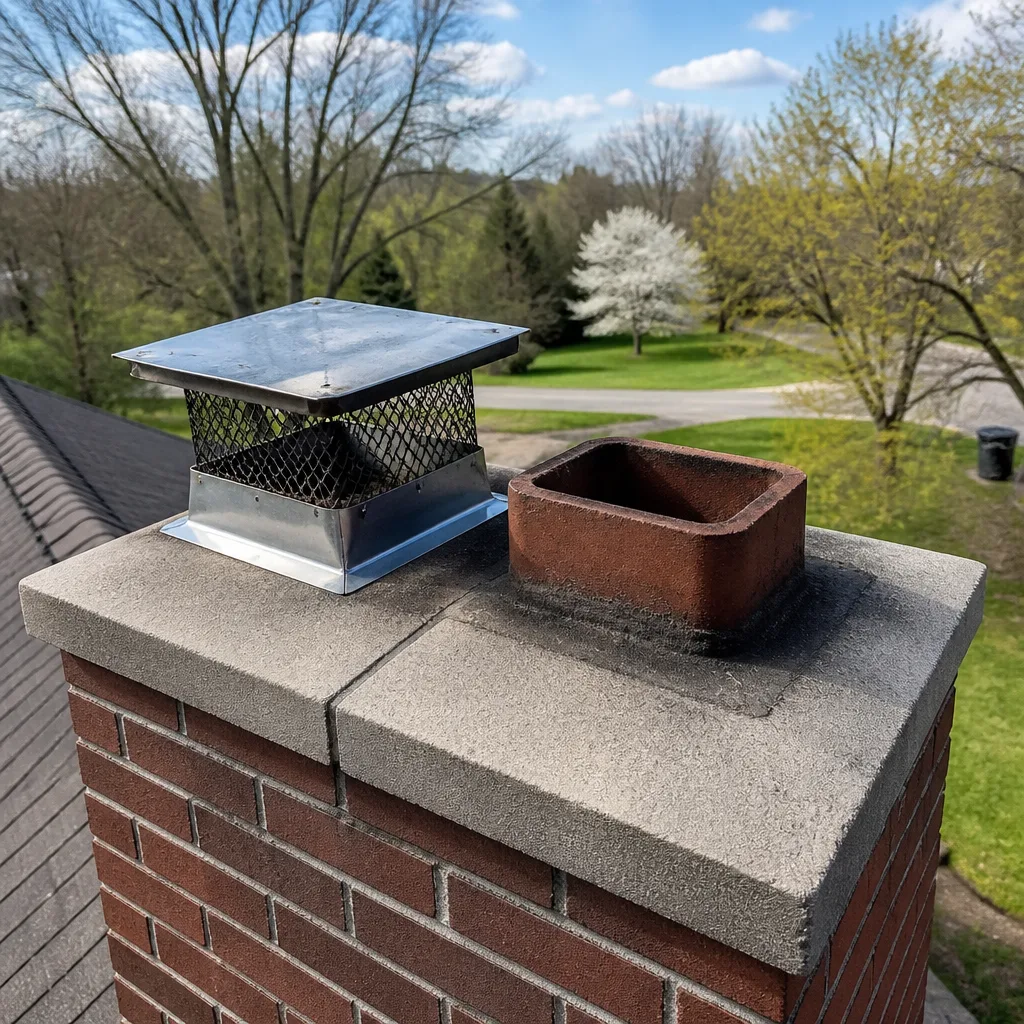
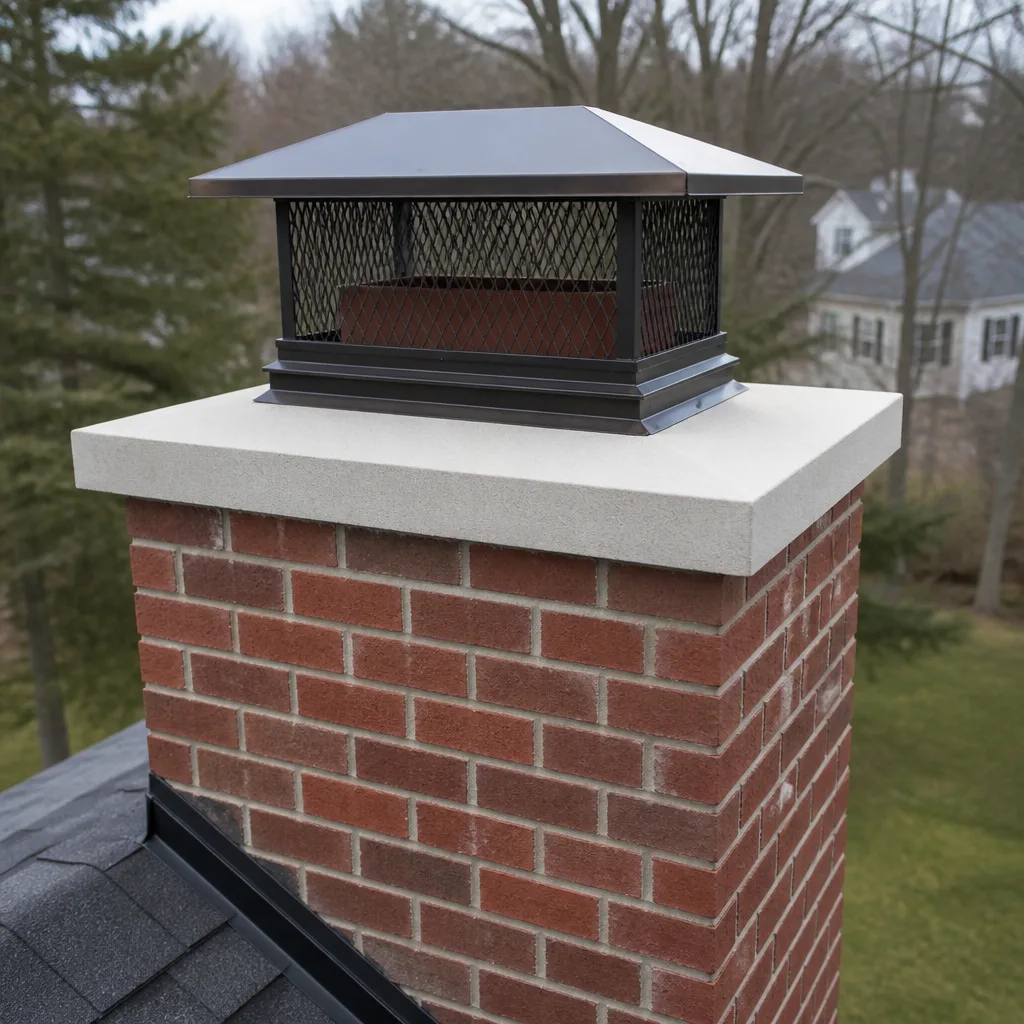
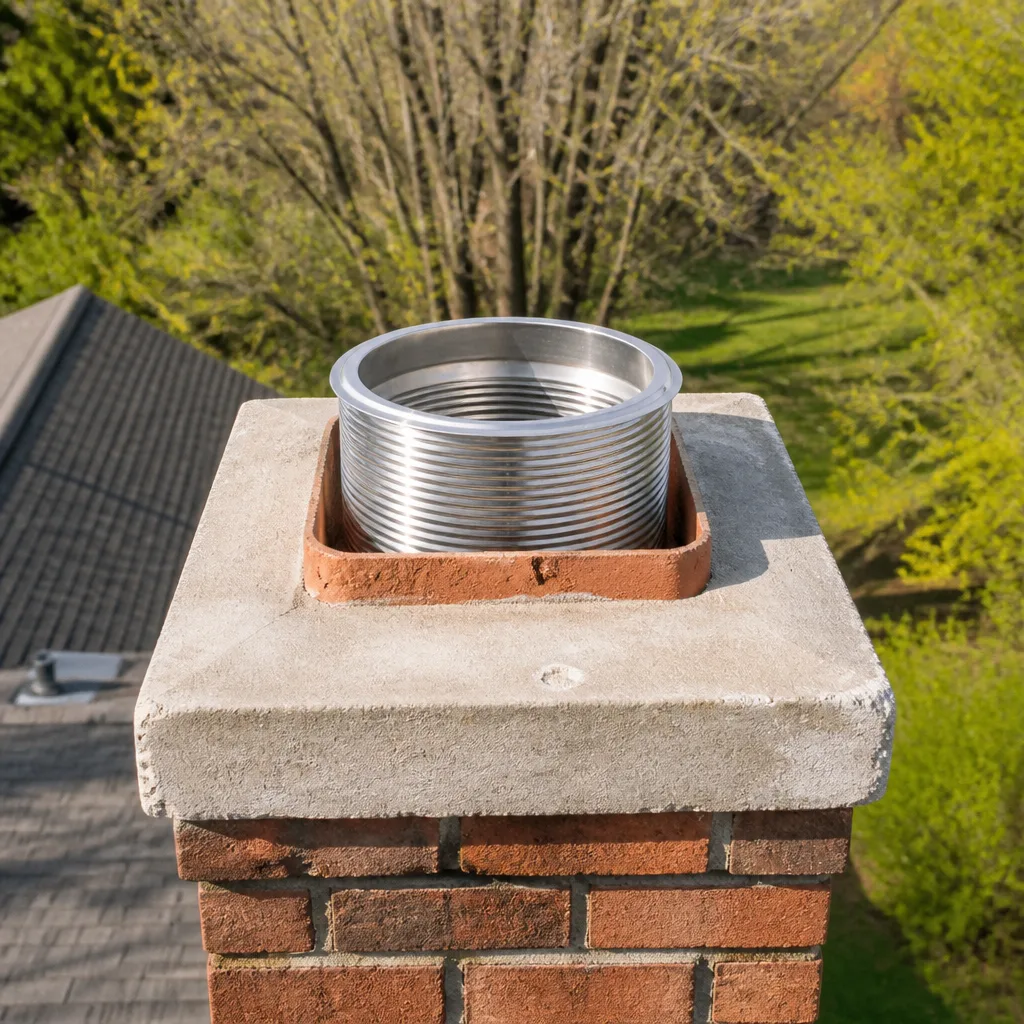
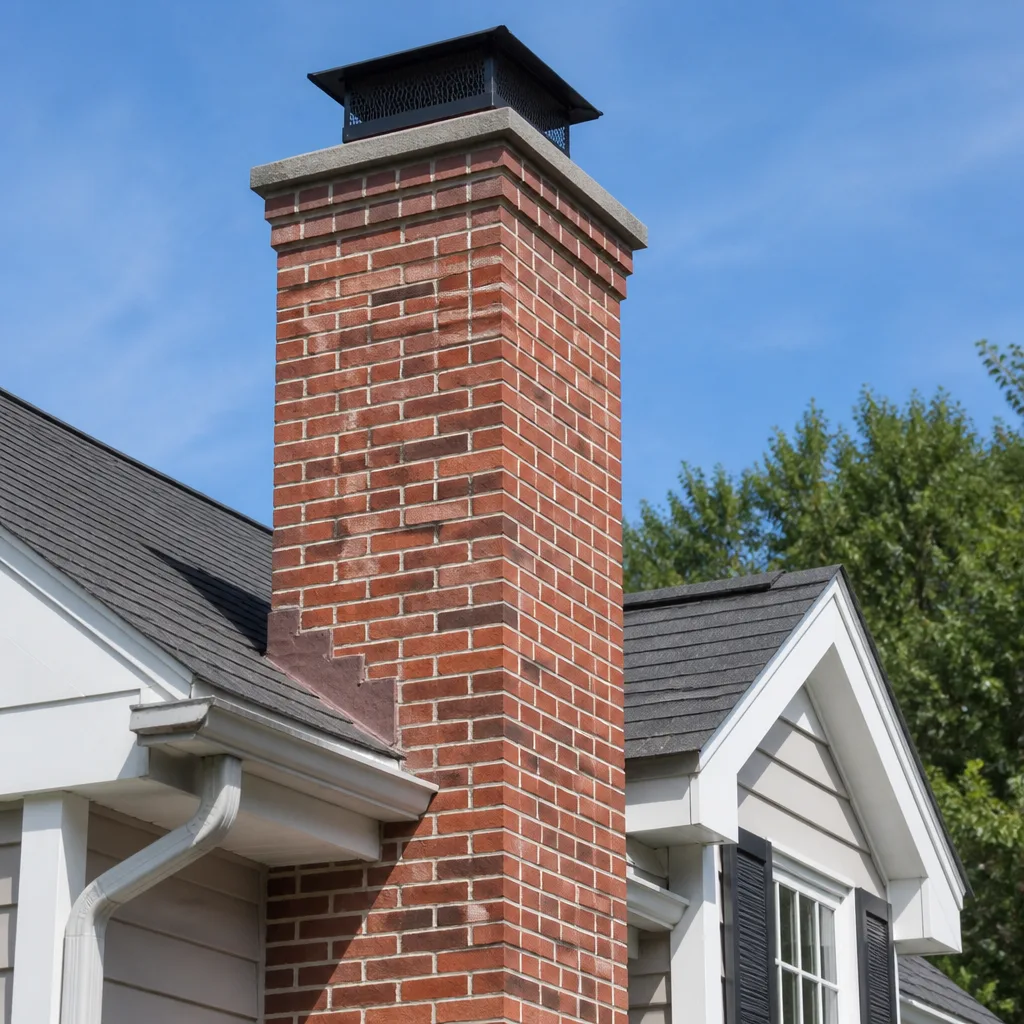
 Before
 After
After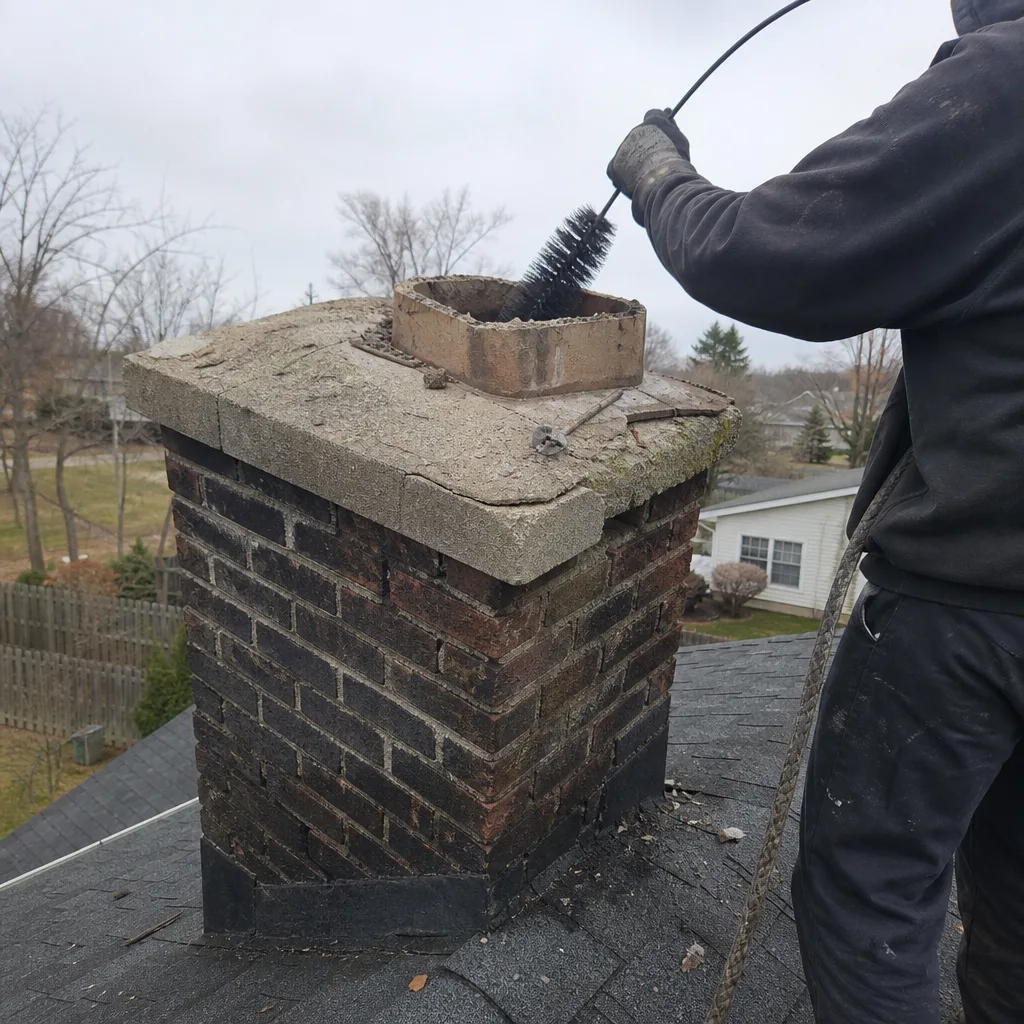 Before
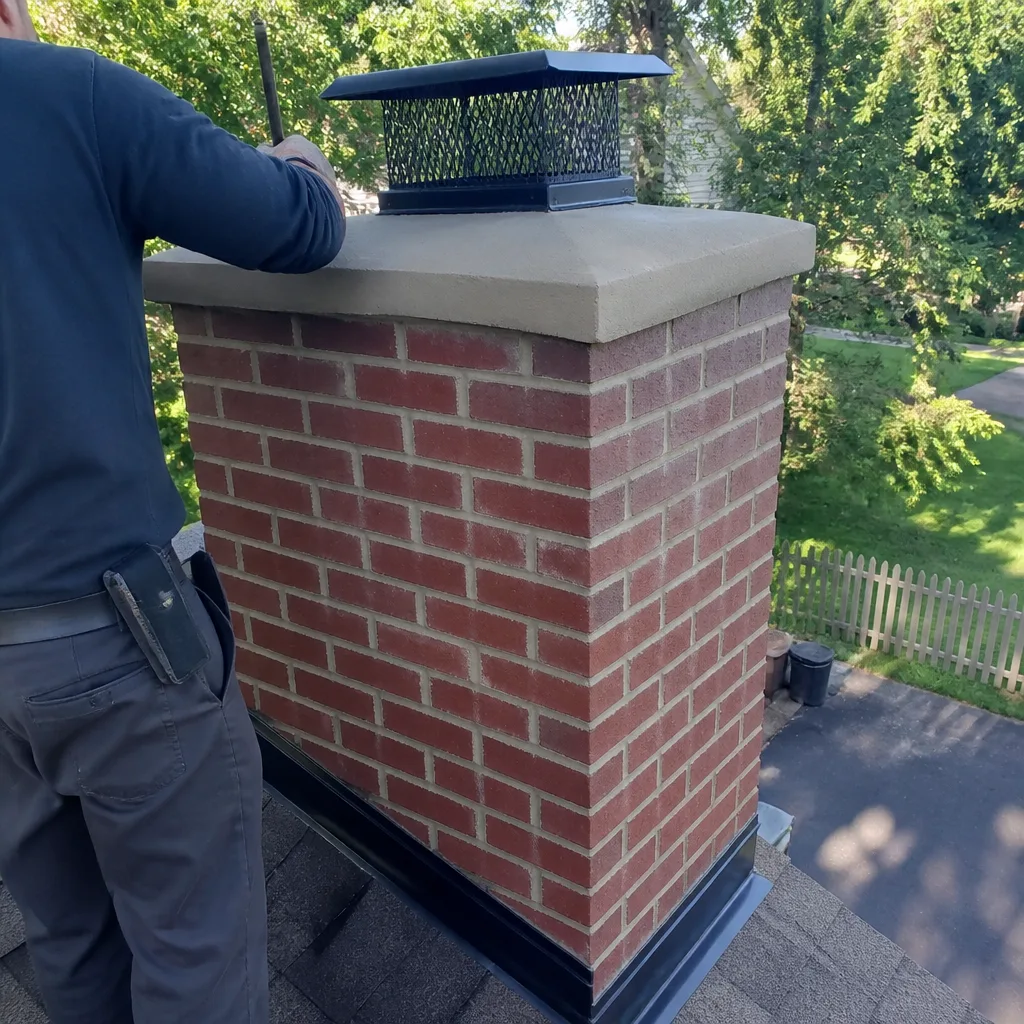 After
After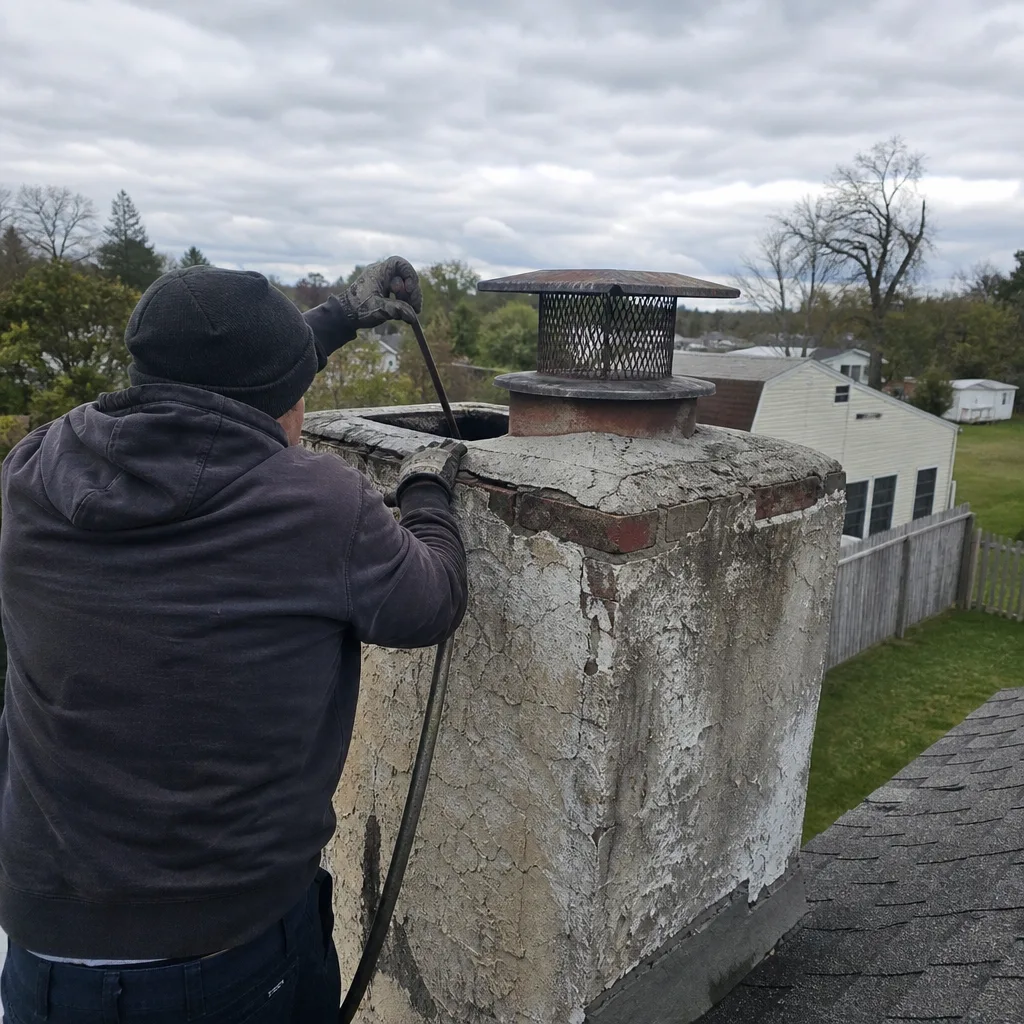 Before
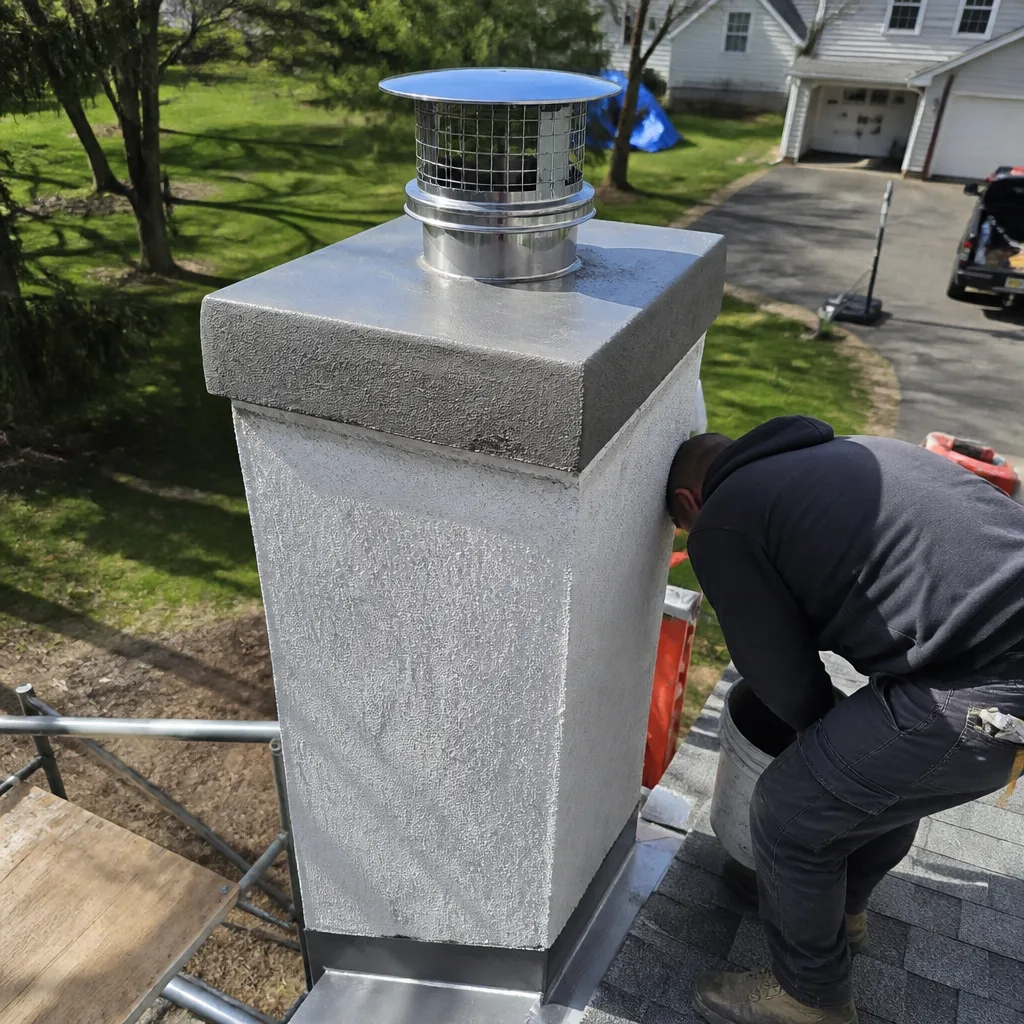 After
AfterHeatShield Chimney Cap Installation: The Quakertown Owner’s Guide
A HeatShield chimney cap installation in Quakertown typically runs between $325 and $780 fully installed, depending on your flue size, roof pitch, and whether the existing mount is still sound. Most homes around Bucks County fall right in the middle of that range, and we stock the common HeatShield cap sizes on the truck so the job is usually done in a single visit. Here’s how it usually plays out: you notice water staining on the ceiling near the flue, or you spot rust streaking down the chase cover after a hard rain, or a nor’easter left the old cap sitting crooked in the yard. Somebody calls us. We climb up, take a look, and more often than not the cap didn’t just fail on its own. It failed because the mount, the sealant underneath, or the chase flashing let water in first. The cap gets the blame, but the cap is rarely the whole story. A cap swap is not a guessing game if you look underneath it, and we always do. That straight look at the whole assembly is why our HeatShield cap installations hold up through Quakertown winters, and why we can stand behind them with the 90-Day Done Right Promise in writing.
Top Hat Chimney is an independent, locally owned service provider. We are not affiliated with HeatShield, but we install and service their caps alongside DuraFlex and Gelco products. If you’re in Quakertown, Milford Township, Richlandtown, Dublin, or Trumbauersville, we’re the local crew that handles this specific repair in person, with a published address and a license number that belongs to Wendell Pike. Nobody behind a call center. That matters when you’re about to spend real money on a cap that has to survive ice, wind, and the occasional confused raccoon.
Which HeatShield Models This Applies To
HeatShield makes caps to fit a range of flue types, and the version you need depends on what’s already in your chase or mounted at the crown. The three we see most often around Quakertown are the standard single-flue cap for clay tile or stainless liner terminations, the multi-flue cap that spans a full masonry crown, and the chase-cover-mounted cap for factory-built fireplaces. The single-flue and chase-mount versions are the ones that generate the most calls because they’re more exposed and fail earlier. If you have a masonry fireplace with a terracotta flue poking above the crown, you’re in the multi-flue or single-flue camp. If your flue is open and the cap clamps to the tile, HeatShield’s band-around design is what typically goes back on. Some older installations used a glue-down base instead of a mechanical band, and that’s the first compatibility gotcha we tell people: a glue-down cap that leaks cannot have a new cap slapped over the same cracked adhesive. The old adhesive has to be chipped off, the tile surface cleaned, and a proper mechanical or re-glued base built to spec. Otherwise the new cap becomes a $600 wind chime after two winters.
Identifying your cap is straightforward. HeatShield marks the underside of the lid or the inside skirt with a model number on most units. If the label is gone, we measure the outside diameter of the flue tile or the inside measurement of the chase cover. A tape measure and a photo of the cap from above and below is usually enough for us to tell you over the phone whether it’s a stock item we carry or something we’ll order. The second compatibility gotcha is the spacing between cap and chase cover. A chase-mounted HeatShield cap needs a specific minimum clearance to breathe. Cramped chase tops in older Quakertown builds sometimes need a modified base plate or a different cap style entirely. That’s not something a generic parts website will flag. It’s exactly the kind of thing you want someone on a ladder checking before money changes hands.
Aftermarket options exist, and for HeatShield in particular, quality equivalents are worth a conversation. Some generic caps use thinner stainless and a single-bolt band. HeatShield’s better caps use a heavier gauge, a two-point or continuous band clamp, and a mesh screen around the lower skirt to keep sparks in and birds out. We’ll install a comparable aftermarket cap when it’s the right call for your flue and budget, but we won’t quietly substitute a lighter part and keep the price difference. You’ll know what you’re getting, what it weighs, and why it costs what it costs. The number you get before we start is the number on the invoice when we finish. No exceptions.
Signs Your HeatShield Chimney Cap Installation Is Failing
When a HeatShield cap starts to fail around Quakertown, it rarely announces itself loudly. It fails in small, expensive-to-ignore ways. Here’s what we find, in order of how often:
- Water staining on the ceiling, wall, or attic sheathing near the chimney. This is the number one call. The cap has rusted through, the screen has corroded, or the sealant under the base has given up. Water is getting past the cap and running down the flue or into the chase. The staining inside the house has been going on for a while before anyone notices.
- Rust streaks down the chase cover or down the brick crown. If the cap’s stainless has been degraded by years of acid from combusted wood or by chimney washdown in a rainy stretch, the cap itself begins shedding. Streak marks on the chase mean the cap’s skirt, base, or fasteners are going, even if the lid still looks solid from the ground.
- A loose or rattling cap when the wind picks up. Bucks County gets wind that will test any mechanical connection. If your HeatShield cap moves when you push on it from a ladder, or if a neighbor says it’s been tapping in a storm, the band or base is failing. A cap that shifts can spark, spark can travel. We fix that the first time it’s reported, not seasonally.
- Debris, nesting material, or animal activity in the flue. A cap with a torn screen or missing sections of mesh is an open door. Birds, squirrels, and the occasional determined raccoon will take the invitation. The first sign is usually a smell, or scratching at dawn. By the time you hear it, there’s often a full nest sitting on top of a blocked flue. That becomes a two-part job: remove the blockage and replace the failed screen section or cap.
- Visible cracks or separation at the cap’s base or in the sealant around the crown. On flatter roofs around Richlandtown and Trumbauersville, homeowners spot this from a second-story window or with binoculars. The cap is not the problem; the joint is. But the joint failure eventually destroys the cap, because the freeze-thaw cycle here in Pennsylvania works on water trapped in a failing seal like a pry bar. Water gets in, freezes, expands, cracks the seam wider. It happens every winter. It will keep happening until the joint is properly re-sealed and the cap re-bedded.
If you’re seeing any of these, the cap itself may or may not need replacing. The mount and the seal underneath dictate the whole job. We always look at both. If it doesn’t need doing, we’ll tell you that too, and show you the photos.
Replacement Cost & What’s Included
In Quakertown, a complete HeatShield cap replacement typically falls in the $325 to $780 installed range, and that’s not a phone estimate meant to change at the door. That’s the price we honor when we get there. The range exists because of real variables: the size of the flue or chase opening, whether we’re replacing just the cap or the cap plus the chase cover, the roof pitch around the chimney, and whether the existing mount needs a rebuild before the new cap goes on. A simple single-flue swap on a one-story walkable roof sits at the low end. A chase-mounted cap on a steep two-story in Milford Township with flashing work sits higher. We’ll tell you which one you’re in before we start, in writing.
Every cap installation from Top Hat Chimney includes removal and disposal of the old cap, inspection of the flue or chase top, new mechanical or re-bedded mounting per HeatShield’s spec, the cap itself in the gauge and size your flue needs, and a photo report of the finished work. We carry the common HeatShield sizes on the truck: 6-inch, 7-inch, 8-inch round and a range of rectangular chase bases. Less common sizes get ordered from our supplier, usually on a two-to-three day turnaround. If your cap is covered by a HeatShield manufacturer warranty, we’ll help with the paperwork and only charge the labor. And the whole job is backed by our 90-Day Done Right Promise. If you call us because something’s not right, Wendell comes back, no additional cost. That’s in writing on every invoice.
Standing offer: $40 off any cap replacement over $200, and 10% off always for seniors and veterans. Also worth knowing: inside the county there’s no trip charge, and if another company gave you a written estimate, we’ll give you a free second opinion on it.
DIY or Call Us?
Here’s the honest truth: a HeatShield chimney cap on a Quakertown roof is not a casual Saturday project, and it has nothing to do with your competence as a homeowner. It’s about height and geometry. The dangerous part is not the cap. The dangerous part is the ladder, the roof pitch, and the fact that after you climb back down with a leak unsolved, it’s now November and your chimney is still wrong. Most people we meet with a failed cap need help because water is getting in, and finding where water is getting in on a chimney is not a visual inspection from the ground. It’s a hands-check around the skirt, a look at the old sealant, a barometer check on the flue pressure, and an honest answer about whether the chase cover underneath is rusted through. None of that happens from the driveway. The cap is the last thing you replace. Everything underneath has to be right first.
If your flue is only planning to work for another season of modest fires, repairing the cap might genuinely be the better call. A small section of torn screen or a loose band we can tighten in an afternoon, for far less than a full replacement. If the cap has rusted through or the base is cracked, replacement is the only repair that makes sense. We’ll know within ten minutes of being up there, and we’ll show you the camera footage to prove it. No invented problems. No padded invoice. Call (484) 603-6713 and we’ll schedule a time that respects your day and gives you a real arrival window. The person who answers the phone works for us, not a national answering service. It may well be Wendell himself.
FAQs
A properly installed HeatShield cap in Bucks County weather typically lasts 8 to 12 years before the screen or sealant degrade enough to need attention. In neighborhoods near the creek, where damp and summer humidity work on the chase from underneath, some caps fail closer to the 6-to-8 year mark. The cap itself can survive longer, but the mesh and the base sealant age faster than the hood. Call (484) 603-6713 for an inspection if your cap has passed the 10-year mark and you want certainty before burning season.
Yes, in many cases. Torn mesh, a loose band, a missing spark screen section, or minor surface rust can be addressed without swapping the whole cap, and we’ll always make that call first and show you why. If the cap has rusted through at the skirt, warped, or the base cracked from freeze-thaw, repair only delays the leak and costs you twice. Call (484) 603-6713 for a free estimate on the specific cap we find up there.
Most HeatShield cap installations are done in 60 to 90 minutes once the old assembly is removed and inspected, assuming the chase and crown are sound. If we need to re-bed the mount or replace a chase cover, the whole job can run two to three hours. We’ll give you a real arrival window before we come out, and call if it looks like it will slip.
We stock the common HeatShield sizes on our truck: 6-inch, 7-inch, and 8-inch round, plus several rectangular chase-mount bases. Specialty sizes can be ordered and typically arrive in two to three days. You don’t need to buy the cap yourself. We’ll bring the right one, install it to spec, and stand behind the work with the 90-Day Done Right Promise.
Written by Wendell Pike, Owner, Top Hat Chimney, serving Quakertown and nearby areas.