
Last updated September 10, 2026
Level 1 sweep and inspection to the NFPA 211 annual standard - flue, crown, cap, and flashing checked and photographed
Chimney sweep logs do not sweep chimneys. They loosen some creosote - which then falls where a brush and vacuum still have to collect it.
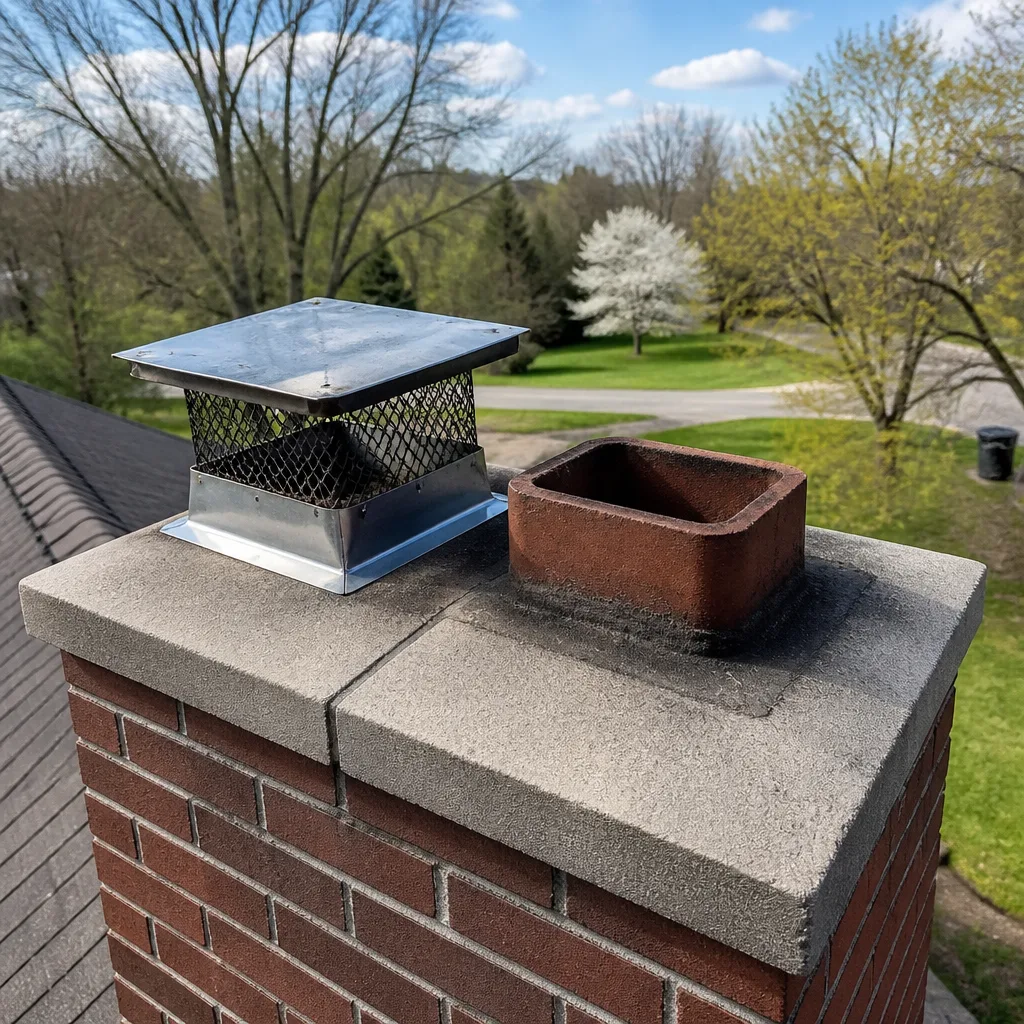
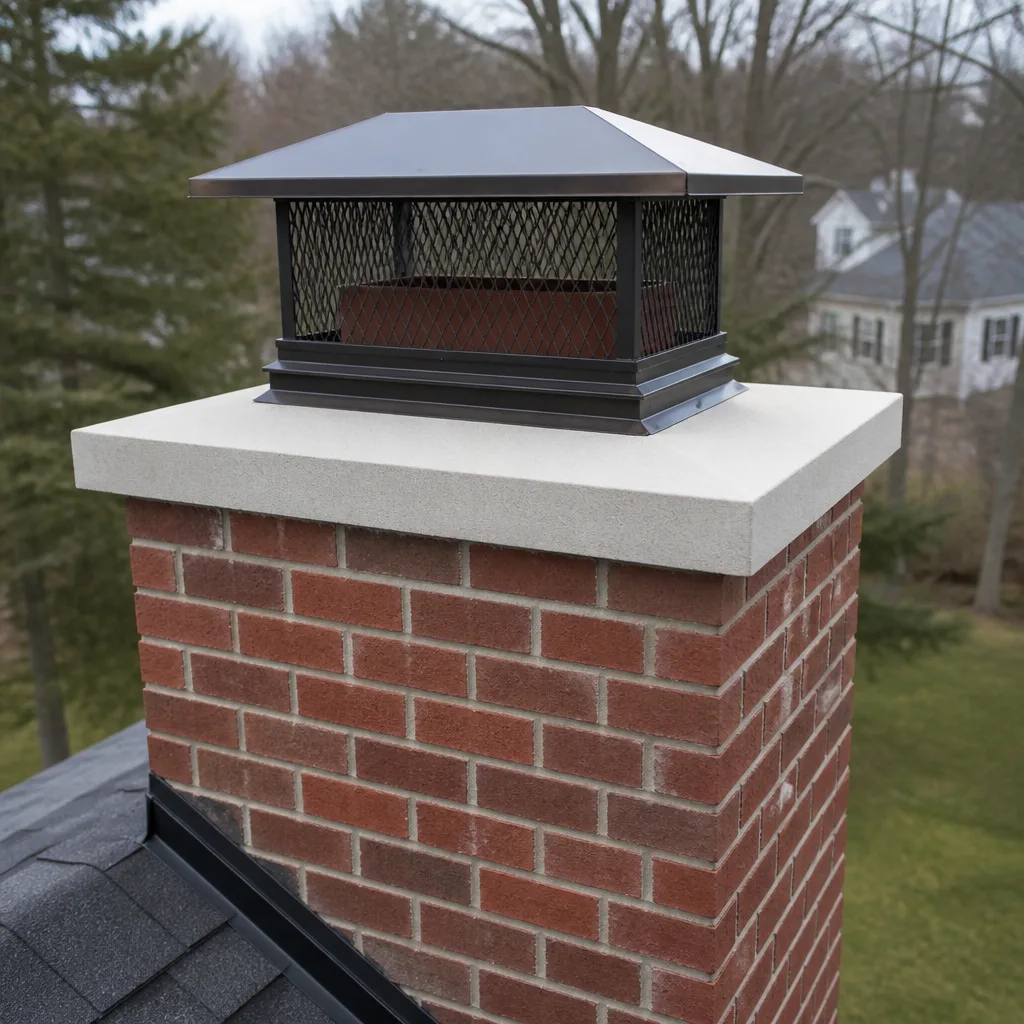
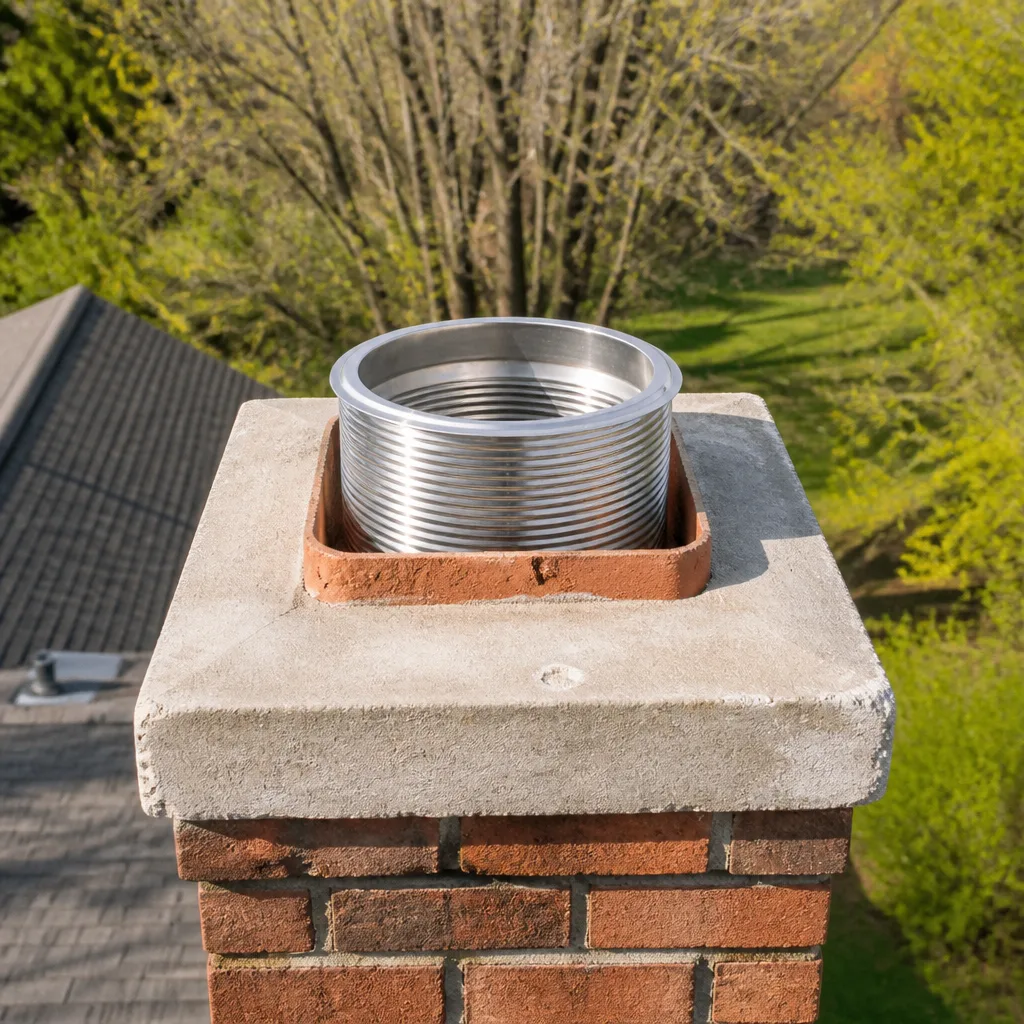
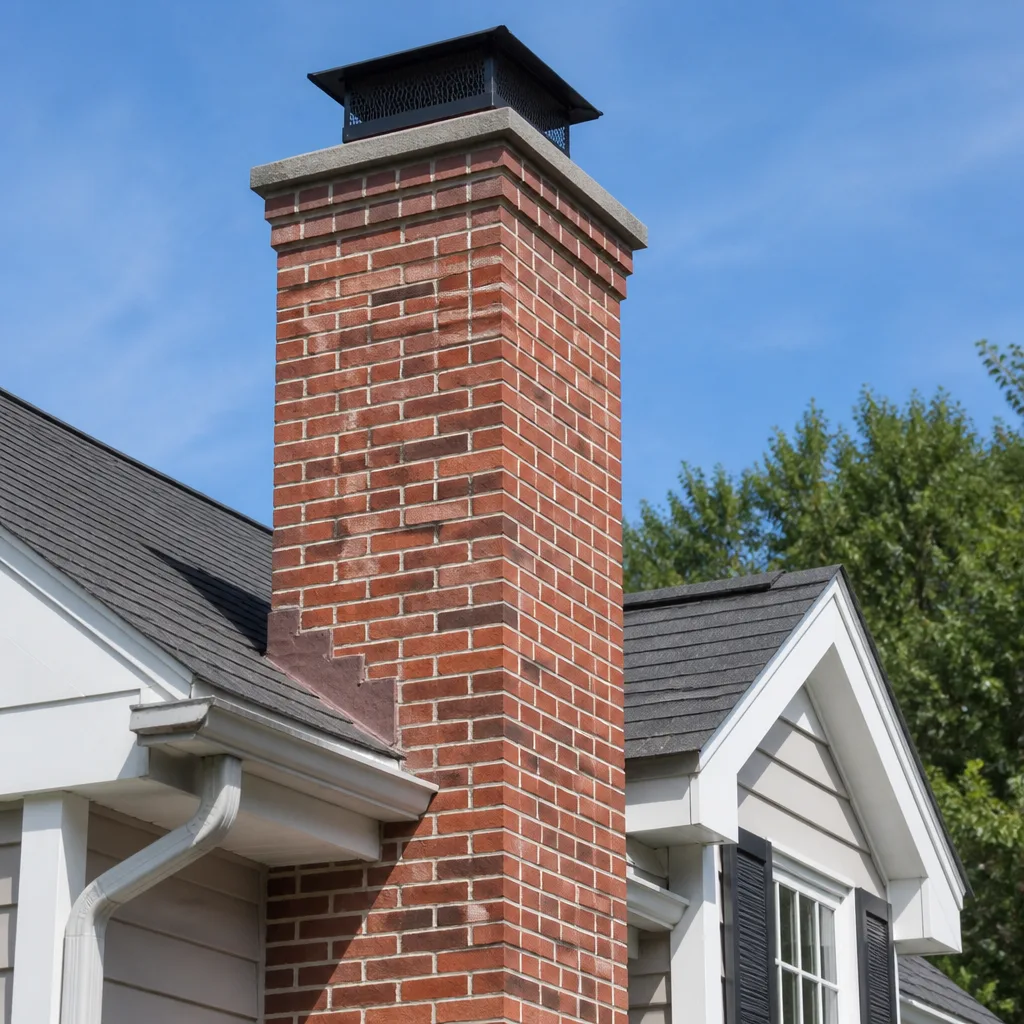
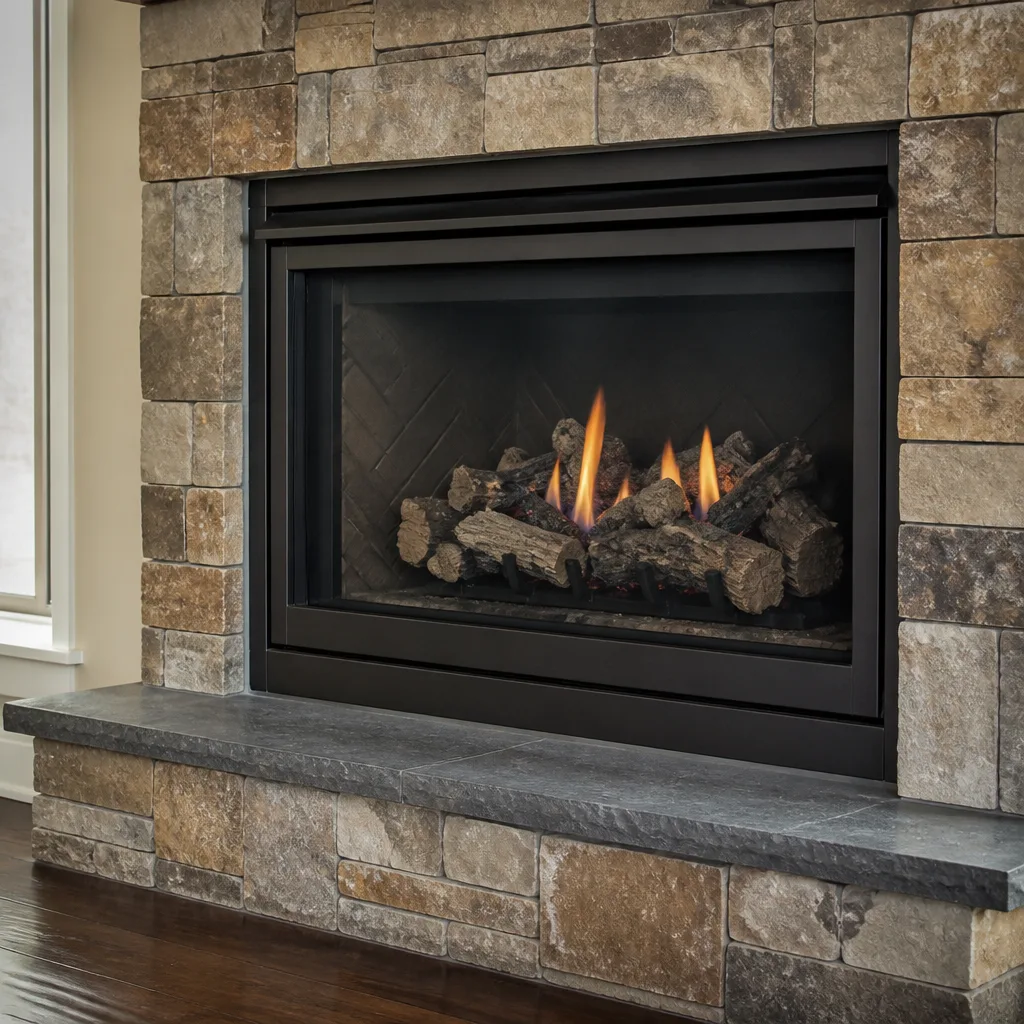
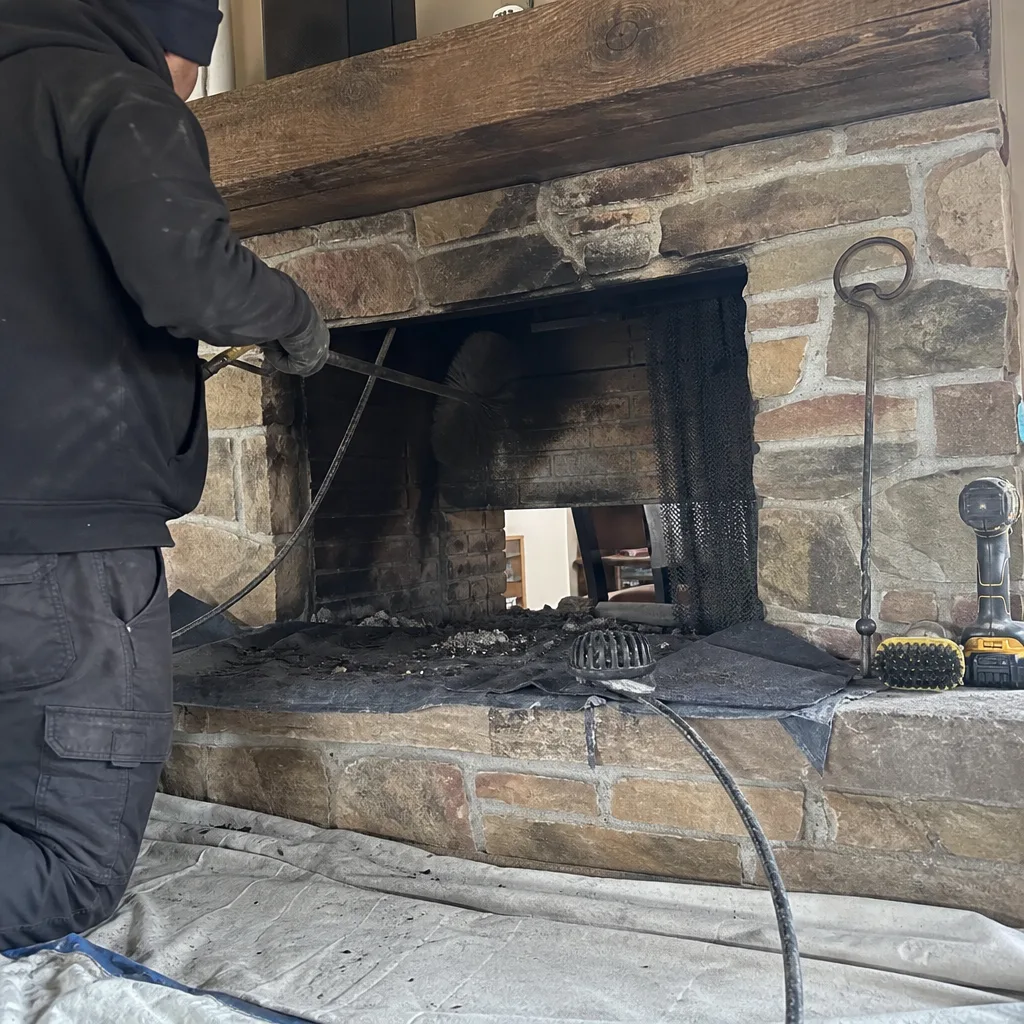 Before
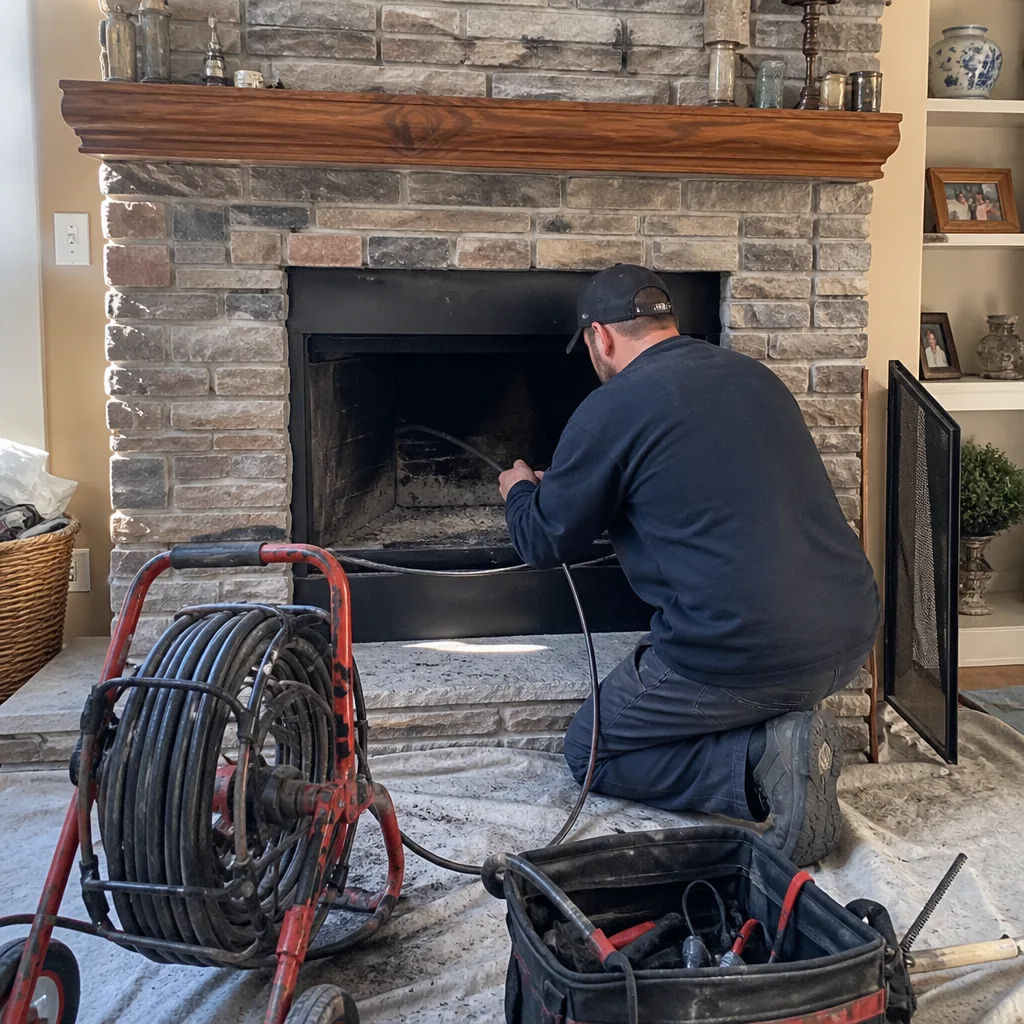 After
After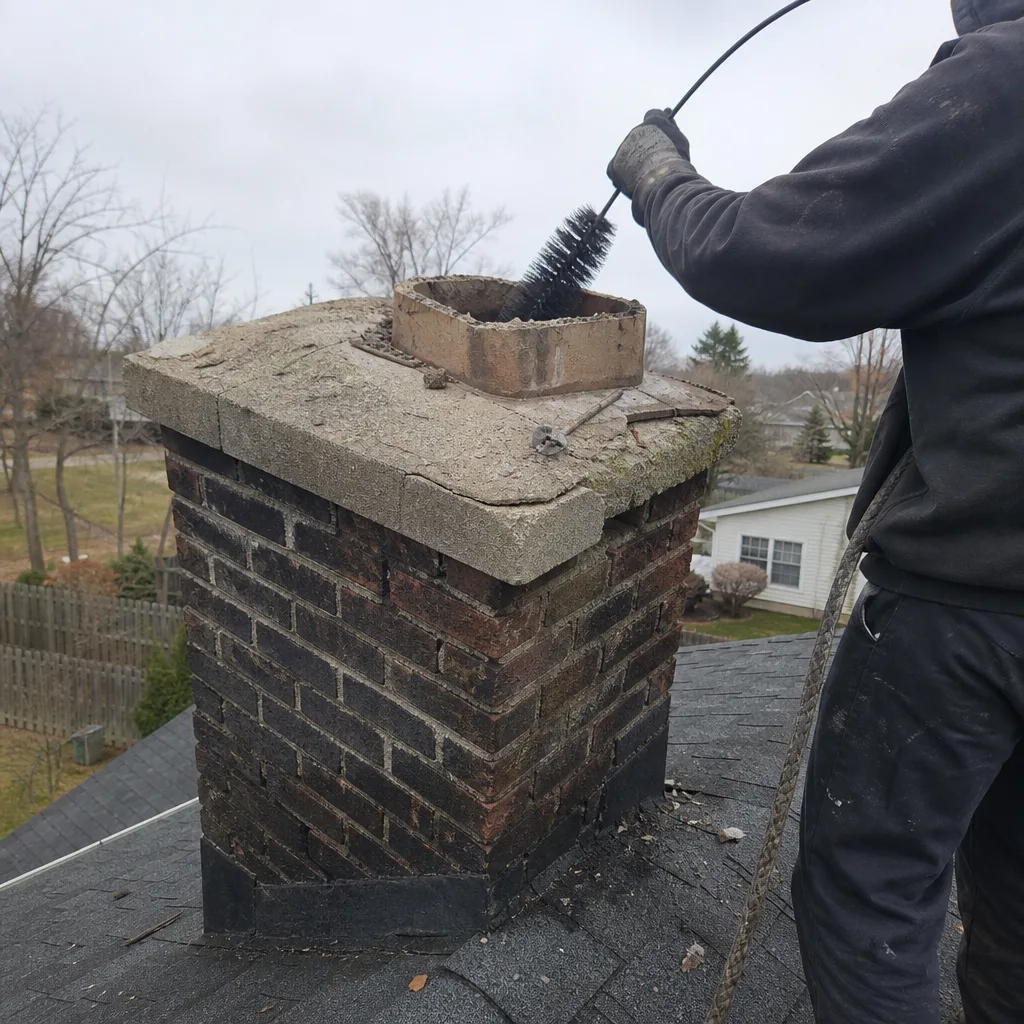 Before
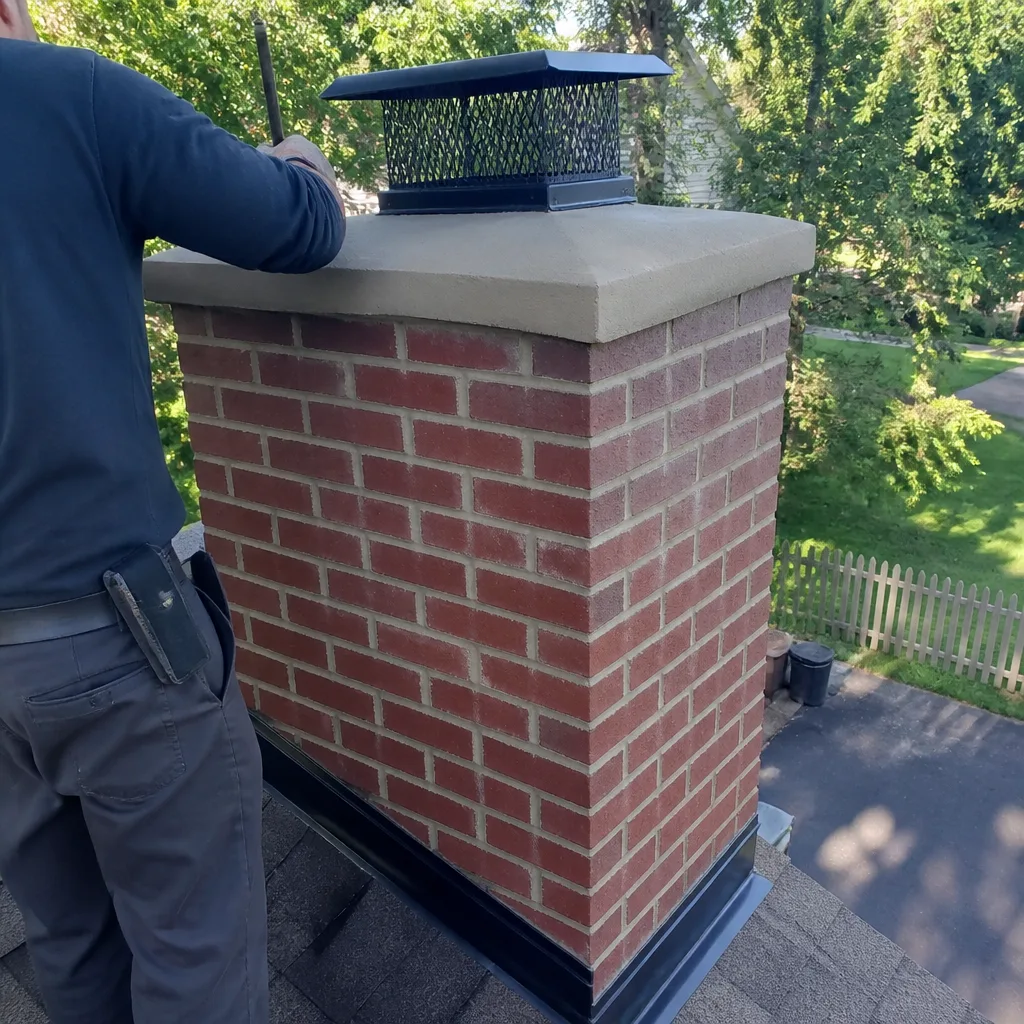 After
After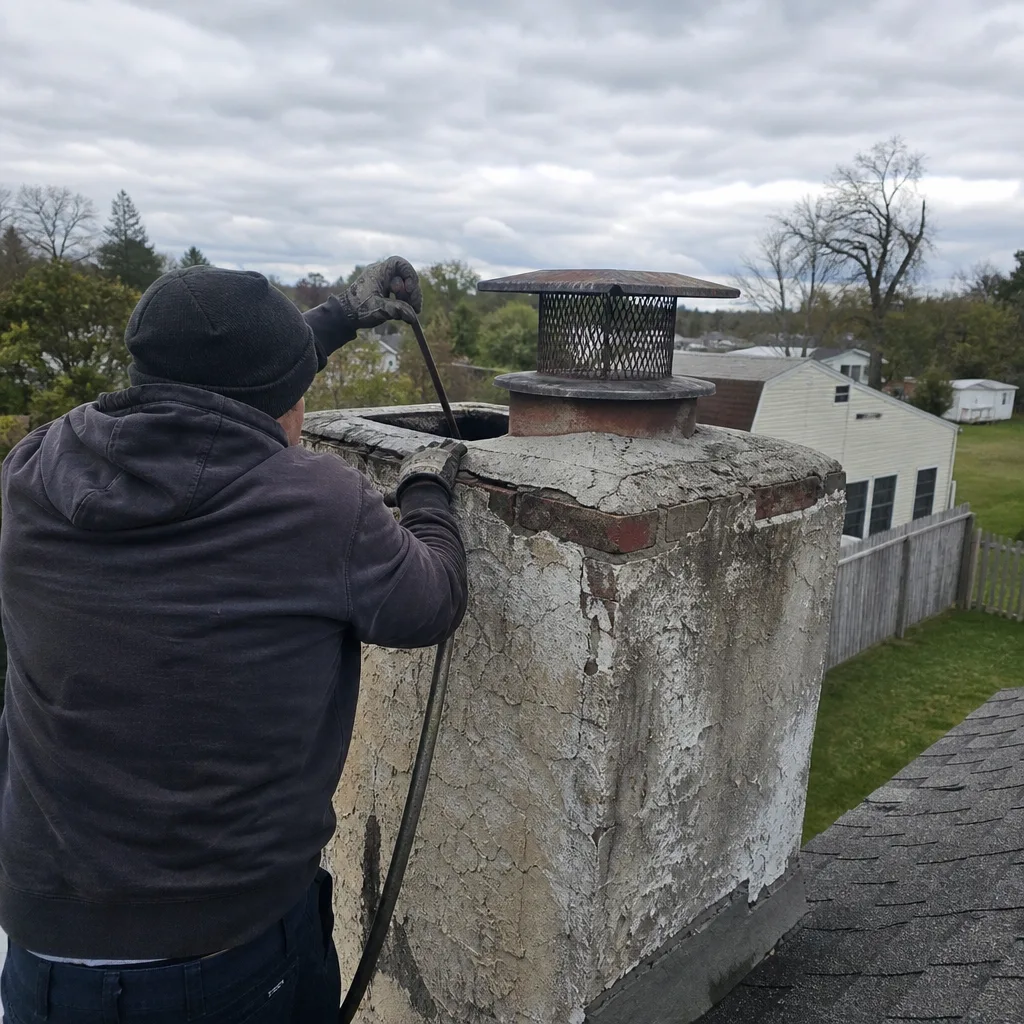 Before
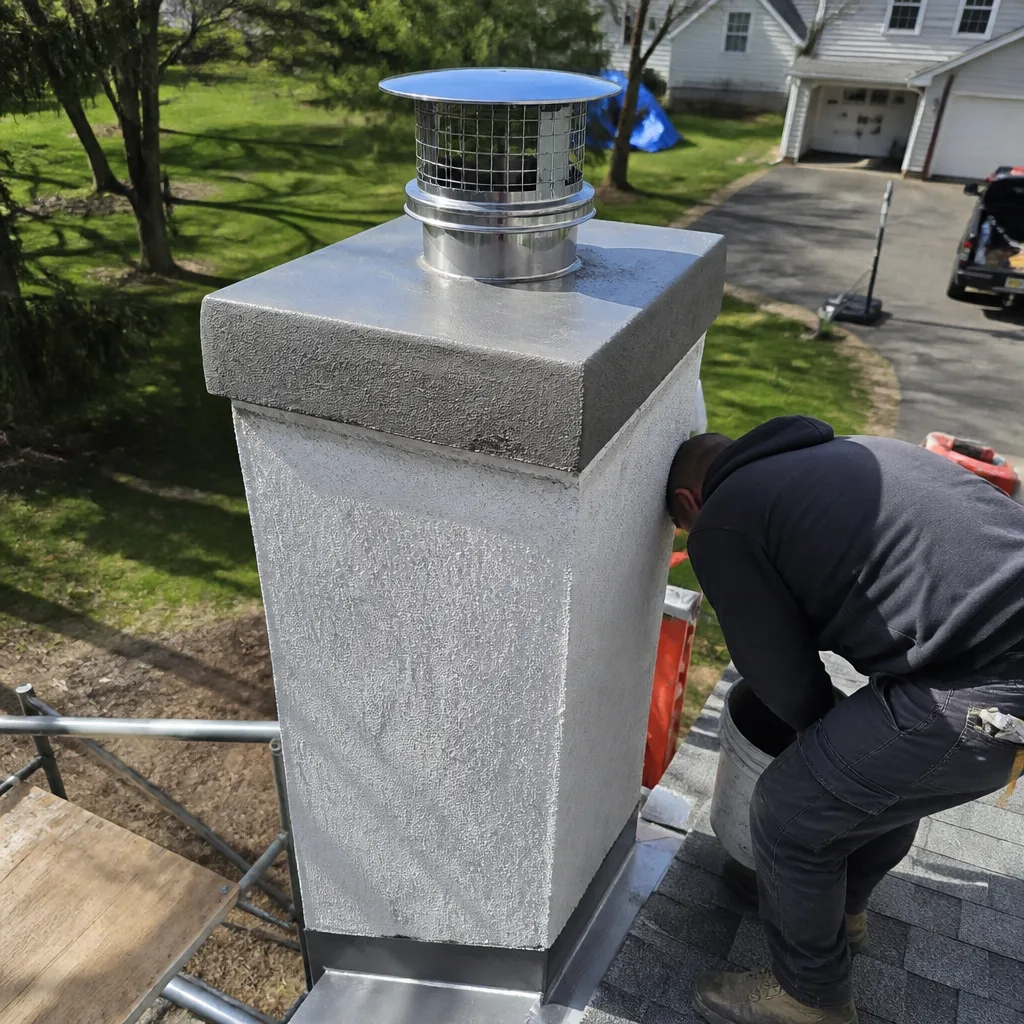 After
AfterChimney Cleaning Permits, Codes & Inspections in PA: What You Need to Know
Most homeowners in Quakertown assume chimney cleaning is a handshake trade with no paperwork. The sweep shows up, runs brushes, hands you a receipt, and you’re done. That’s true for a standard sweep. But the moment your chimney needs more than cleaning, Pennsylvania’s Uniform Construction Code (UCC) and Bucks County’s local amendments create obligations most people never hear about until an insurance adjuster starts asking questions. This guide lays out where the line sits, what documents actually matter, and why the difference between a receipt and a permit can cost you real money. For The Complete Guide to Chimney Cleaning in Quakertown, see our companion resource.
Quick Answer
A routine chimney sweep in Pennsylvania requires no permit and no inspection. But the moment work moves into repair, replacement, or any modification to the flue, firebox, or chimney structure, Pennsylvania’s UCC requires a permit and inspection, and Bucks County’s local amendments add specific documentation and clearance requirements. The line is crossed when a repair changes how the chimney functions, not just when you’re cleaning what’s already there.
Table of Contents
- The Foundation: What Pennsylvania’s UCC Actually Governs
- The Line Between Cleaning and Permit-Required Repair
- Bucks County and Quakertown’s Local Amendments: What Changes
- Level 2 Inspections: What They Mean in Real Estate
- How Insurance Underwriters Really See Your Chimney
- The Liner Replacement Scenario: Where Coverage Gaps Hide
- How to Verify a Sweep’s Work Will Hold Up
- Common Mistakes to Avoid
- When to Call a Professional
- Frequently Asked Questions
- The Bottom Line
The Foundation: What Pennsylvania’s UCC Actually Governs
The Pennsylvania Uniform Construction Code went into effect in 2004. It took the patchwork of township rules and replaced them with one set of standards based on the International Residential Code and International Building Code. For homeowners, the UCC is not a suggestion. It’s a legal requirement enforced at the local level. In Bucks County, that means local code officials acting under state authority.
The codes apply to construction, alteration, repair, and demolition of buildings. Key point: alteration includes any change to a structure’s mechanical, plumbing, electrical, or fire protection systems. A chimney fire is a fire protection system by definition. So when we talk about changing a flue liner, rebuilding a crown, or replacing a damper assembly, we’re talking about work that falls under UCC jurisdiction unless a specific exemption says otherwise.
Here in Quakertown, we’ve watched this surprise a fair number of homeowners. They’ll have a chimney sweep out for a cleaning, the sweep spots a cracked tile, and says they can replace it. Fine. But if that replacement happens without a permit and the new tile fails, the homeowner has no legal record the work was ever done correctly. Their insurance policy then contains a material alteration they can’t substantiate.
The Line Between Cleaning and Permit-Required Repair
This is the question worth nailing down before you ever pick up a phone. The short answer: sweeping, brushing, vacuuming, and applying a surface-level creosote treatment require no permit; see our Chimney Cleaning & Sweep Maintenance Checklist for Quakertown Homeowners for details. Replacing components, modifying the flue path, changing venting, rebuilding masonry, or installing a liner does.
Here’s a working list for Bucks County homes:
- No permit needed: routine chimney sweeping, creosote removal, Level 1 inspections, minor crown sealing with an approved sealant, replacing a standard fireplace damper where the opening dimensions don’t change, installing a chimney cap that does not alter flue diameter.
- Permit required: flue liner installation or replacement (including cast-in-place, stainless, or clay tile), firebox rebuilding, smoke chamber parging with structural material, changing flue size or direction, installing a wood stove with new venting, repairing a cracked flue tile where the tile is removed and replaced.
- Gray zone (verify with code office): HeatShield application to damaged flue tiles. This is a repair that changes the flue’s fire resistance. Some inspectors treat it as a repair requiring permit. Others see it as a liner system requiring full replacement documentation. Call before proceeding.
We tell customers the same thing Wendell has said for years: your flue doesn’t care how the fire looks. It cares how it breathes. If a repair changes how it breathes, you’re in permit territory. And Bucks County code enforcement will side with the strictest reading when a claim is on the table.
Bucks County and Quakertown’s Local Amendments: What Changes
State code is a floor. Local municipalities can add to it, and Bucks County municipalities often do. For homeowners in Quakertown borough and the surrounding townships, three local provisions matter most for chimney work.
First, inspection timing. Pennsylvania’s UCC allows rough and final inspections based on the scope of work. Quakertown’s enforcement is aggressive about the final inspection on any chimney repair that involves lining or structural work. You cannot legally close the job without it. The chief inspector’s office has been known to red-tag unpermitted chimney work when discovered during unrelated inspections.
Second, documentation on older homes. In Bucks County, homes built before 1960 often have unlined or clay-tile flues that predate modern code. When you touch that chimney, the code official can require you to bring the entire system up to current standard, not just the piece you’re fixing. That’s a huge cost swing from a “simple repair” quote. Wendell sees this regularly in Quakertown’s older neighborhoods like Richland Terrace and the borough proper, where chimneys from the 1920s and 1930s are still in use.
Third, the wood stove rule. Bucks County requires a separate mechanical permit and inspection for any new wood stove or insert installation, even if the existing chimney is being used. This triggers additional clearance-to-combustible verification. We’ve had customers buy an insert in October, think the installer handles everything, and find out in December they need another inspection. Ask your sweep before installation, not after.
Practically speaking, the best move is one phone call to the Quakertown Borough code office or the township where your home sits. Ask the direct question: “I’m considering [specific repair]. What permit and inspection does this require under the current UCC and local amendments?” Then write down the name of the person who answered. If you later get conflicting guidance, that name matters.
Level 2 Inspections: What They Mean in Real Estate
A Level 2 inspection is a camera scan of the flue interior, often required during real estate transactions, after a chimney fire, after changes to the fuel source, or after severe weather. In Bucks County’s real estate market, it has become near-standard on home sales in Quakertown, Milford Township, and Richlandtown. Buyers ask for it. Sellers get it. But both sides frequently misunderstand what the report legally is.
A Level 2 report is not a permit. It is not a code compliance certification. It is a documented assessment of the chimney’s condition at the time of inspection, performed according to National Fire Protection Association (NFPA) 211 standards. If the inspector finds a cracked flue tile and writes it down, that report becomes evidence. If the seller then ignores it and sells, the report could be used against them if a chimney fire happens later. If the buyer reads “cracked tile” and assumes the house is unsafe, they may overreact. A single cracked tile in a mid-century Quakertown rancher is common and often repairable, not a structural emergency.
What the report should give you is a clear scope: what was observed, where, and what follow-up is recommended. We tell buyers and sellers the same thing: the camera footage and a plain-English verdict, every time, no exceptions. If a sweep hands you a form without footage or photos, ask for more. The footage is the evidence. The form is just a summary of it.
How Insurance Underwriters Really See Your Chimney
Homeowners insurance policies contain a material change clause. You’re required to notify the insurer of changes to the property that affect risk. A new chimney liner installed without a permit is an unreported material change. A liner installed after a chimney fire but never documented as permitted is worse: it’s a repair that may have been required by the claim itself, and the insurer has no legal proof it ever happened correctly.
Underwriters are not warm. They look at documentation. When a claim arrives, the adjuster asks for three things: proof of loss, proof of repair, and proof the repair met code. A receipt from a chimney sweep that says “installed new liner” without a permit number, without an inspection date, without a code official’s sign-off is worth very little. It might as well not exist.
For Quakertown homeowners, the practical checklist for an insurable chimney record:
- Keep the original sweep receipt from every cleaning, with date, technician name, and what was found.
- Keep all Level 1 and Level 2 inspection reports, including camera footage if available.
- If any repair involved code-regulated work, keep the permit number, the inspection date, and the name of the municipal code official who signed off.
- If a liner was replaced after a chimney fire, keep the claim number, the adjuster’s name, and every document related to the repair side by side.
- Scan everything. Paper curls, burns, and disappears. A cloud folder costs you nothing and survives a chimney fire.
Ask anyone on your street. The homeowner who keeps records is not the one who wins a fight with an insurer. The one who can produce them in an hour is.
The Liner Replacement Scenario: Where Coverage Gaps Hide
The single most common place we see insurance trouble start is after a chimney fire. A homeowner calls us, we inspect, we find creosote glaze and a cracked flue liner. The fire department came and went. The insurer paid for cleaning and some repair. The liner gets replaced. Everyone is happy. Two years later, another fire. The insurer now asks for documentation of the liner replacement. There is none. The repair was done by a handyman or a sweep who didn’t pull a permit. The claim is denied or reduced.
This is not hypothetical. It happens in Quakertown and across Bucks County every season. Once a year, burn or no burn. Chimneys break in the off-season too. And when they break after a fire, the repair must be code-documented or it’s a coverage gap waiting to be found.
Here’s the sequence that protects you:
- After any chimney fire, demand a Level 2 inspection with camera footage, even if the fire department says it was minor.
- Get the written recommendation from the inspector. If they recommend a liner, get it in writing.
- Confirm with the code office whether a permit is required for the liner work in your municipality. Assume yes until told otherwise in writing.
- Hire a contractor who pulls the permit, schedules the inspection, and gives you the sign-off. Not one who tells you permits are a scam.
- File the documentation with your insurance company proactively. Do not wait for them to ask.
No-hassle upfront pricing matters here, but documentation matters more. The number you hear on the phone is the number on the invoice, and the invoice needs a permit number on it.
How to Verify a Sweep’s Work Will Hold Up
Not every sweep in Bucks County is created equal. The state does not license chimney sweeps directly, which surprises most homeowners. You’re hiring based on certifications, experience, and reputation, not a state-issued license. That makes verification doubly important.
Here’s what to check before you book:
- Certifications. Look for CSIA (Chimney Safety Institute of America) or equivalent certification. It’s not state law, but it’s the standard Wendell has held to since 1999.
- Insurance. The sweep should carry liability insurance and workers’ compensation. Ask for proof. Don’t take a verbal yes. A slip-and-fall on your roof by an uninsured worker becomes your claim.
- Camera inspection protocol. Every Level 2 inspection should include video you can see. Not a description. Footage. If someone won’t show you the inside of your flue, that’s a red flag.
- Documentation policy. Ask what paperwork you’ll receive for a routine sweep and for a repair. The answer tells you a lot about how they operate.
- Local presence. A sweep who has worked Quakertown since 1999 knows the local code officials, the common issues in 1950s split-levels and 1800s borough twins, and the weather patterns that eat masonry. That local knowledge shows up in what they find and what they recommend.
We’ve been around long enough that when a code official in Richlandtown or Milford calls the office, they know who answered. That’s not a credential. It’s a relationship. But it’s the kind of thing that makes permitting smoother when it needs to happen.
Common Mistakes to Avoid
- Assuming cleaning and repair are the same category. They’re not. Cleaning is maintenance. Repair is construction. The permit requirement flips on the moment material changes.
- Trusting a handshake guarantee. If the repair goes wrong, a handshake isn’t documentation. Get the permit, the inspection, and the sign-off. Written, every time.
- Ignoring local amendments because state code seems clear. Bucks County and Quakertown have added requirements. What passed in Lancaster County may not pass here.
- Letting a real estate transaction rush the inspection. A rushed Level 2 report done under closing pressure misses things. Better to push closing one day than buy a chimney problem.
- Replacing a liner after a chimney fire without a permit. This is the coverage-killer. It’s the number-one way we see homeowners lose claims.
- Not asking the sweep to show you the footage. If you can’t see the flaw with your own eyes, you’re trusting a summary. Demand the video.
- Skipping annual sweeps in the off-season. Creosote doesn’t care if you’re burning. It builds, it dries, and it becomes a fire risk sitting there all summer.
When to Call a Professional
Call us if you’ve had a chimney fire, even a small one that the fire department cleared. Call if you can smell smoke long after the fire is out, if you see efflorescence or spalling brick, if your damper has stopped sealing, or if you’re buying or selling a home and a Level 2 inspection has been requested. Call if you inherited a chimney and have no records for it. Call if your insurance company has started asking about your fireplace. Top Hat Chimney offers free estimates in Quakertown. Call (484) 603-6713 and we will tell you what we see, what it means, and what we can safely leave alone. The camera footage and a plain-English verdict, every time, no exceptions. For more guides & resources, visit our blog.
Frequently Asked Questions
No. A standard sweep involves brushing and vacuuming only, and Pennsylvania’s UCC does not require a permit for that. Keep your receipt with the date and technician name for insurance records.
Any repair that changes the flue, firebox, smoke chamber, or chimney structure requires a permit. This includes liner installation or replacement, firebox rebuilding, flue tile replacement, and smoke chamber parging. When in doubt, call the Quakertown Borough code office and ask.
A standard sweep in Quakertown typically runs $175 to $350 depending on chimney height, accessibility, and creosote stage. First-degree creosote is a brush job. Third-degree is a glaze. Catch it early. Top Hat Chimney gives upfront pricing before work begins. Call (484) 603-6713 for an exact quote.
Yes, that is a real possibility. Insurers routinely deny or reduce claims when repairs that changed the fire safety system were done without permits and inspections. The documentation gap, not the work itself, becomes the problem. Get the permit and the sign-off.
A Level 2 inspection is a video scan of the flue interior, required after a chimney fire, during real estate transactions, after fuel changes, or after severe weather. The report is evidence of what the inspector saw, not a code compliance certification. Wendell and his crew run camera on every Level 2 and you see the footage yourself.
If the flue tiles are cracked or missing and smoke is leaking into the house, you likely need a liner. If the sweep can’t show you the crack on camera, get a second opinion. Top Hat Chimney offers free second opinions on any written estimate. Call (484) 603-6713. We will tell you plainly when work can safely wait.
Once a year, burn or no burn. Chimneys break in the off-season too. Annual sweeping catches first-degree creosote before it becomes glaze, and it gives you a documented record for insurance. In Quakertown’s climate, freeze-thaw cycles alone justify the annual check.
The Bottom Line
Pennsylvania’s UCC governs chimney work once you move beyond routine cleaning, and Bucks County’s amendments make Quakertown’s rules stricter and more documentation-dependent than most homeowners realize. The line between a sweep and a permit is crossed when the repair changes how the flue functions. Unpermitted work, especially liner replacement after a chimney fire, is the number-one coverage gap we see on denied claims. Keep your receipts, your permits, and your camera footage. Top Hat Chimney home has served Quakertown since 1999. For chimney cleaning and sweep in Quakertown, we recommend an annual check with full documentation. For chimney repair in Quakertown, we pull the permits and schedule the inspections. For fireplace services in Quakertown, we carry the brands that hold up: HeatShield, Gelco, and Olympia Chimney. Call (484) 603-6713 and ask for Wendell. He answers the phone.
Written by Wendell Pike, Owner at Top Hat Chimney, serving Quakertown since 1999.