
Last updated September 10, 2026
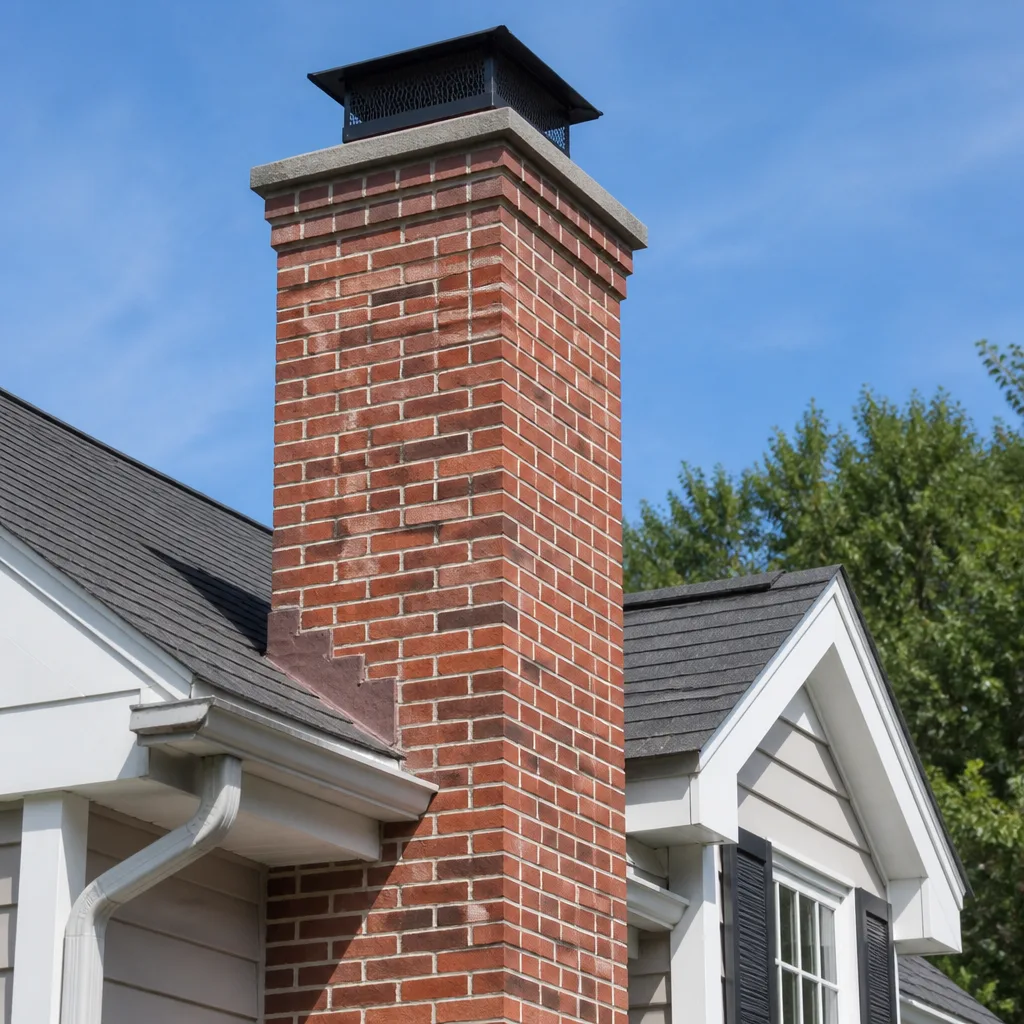
Level 1 sweep and inspection to the NFPA 211 annual standard - flue, crown, cap, and flashing checked and photographed
Chimney sweep logs do not sweep chimneys. They loosen some creosote - which then falls where a brush and vacuum still have to collect it.
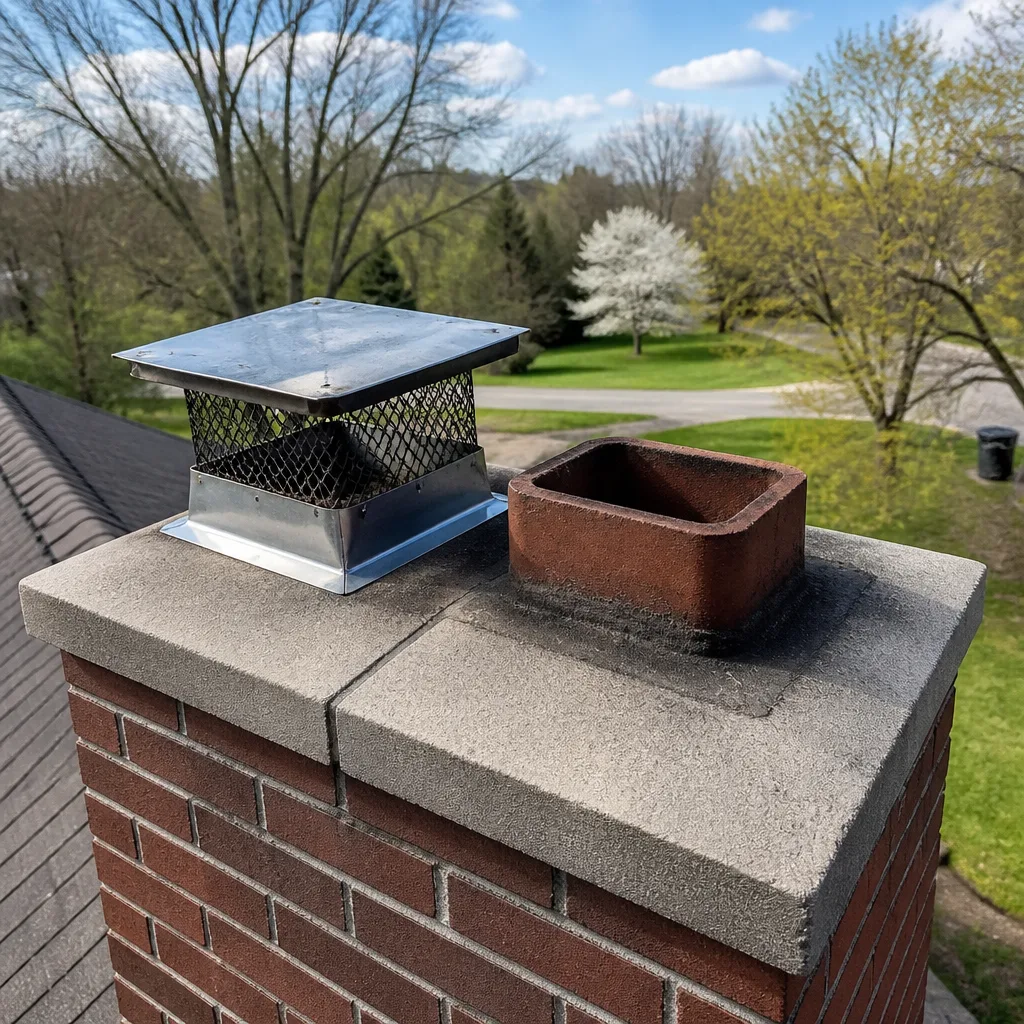
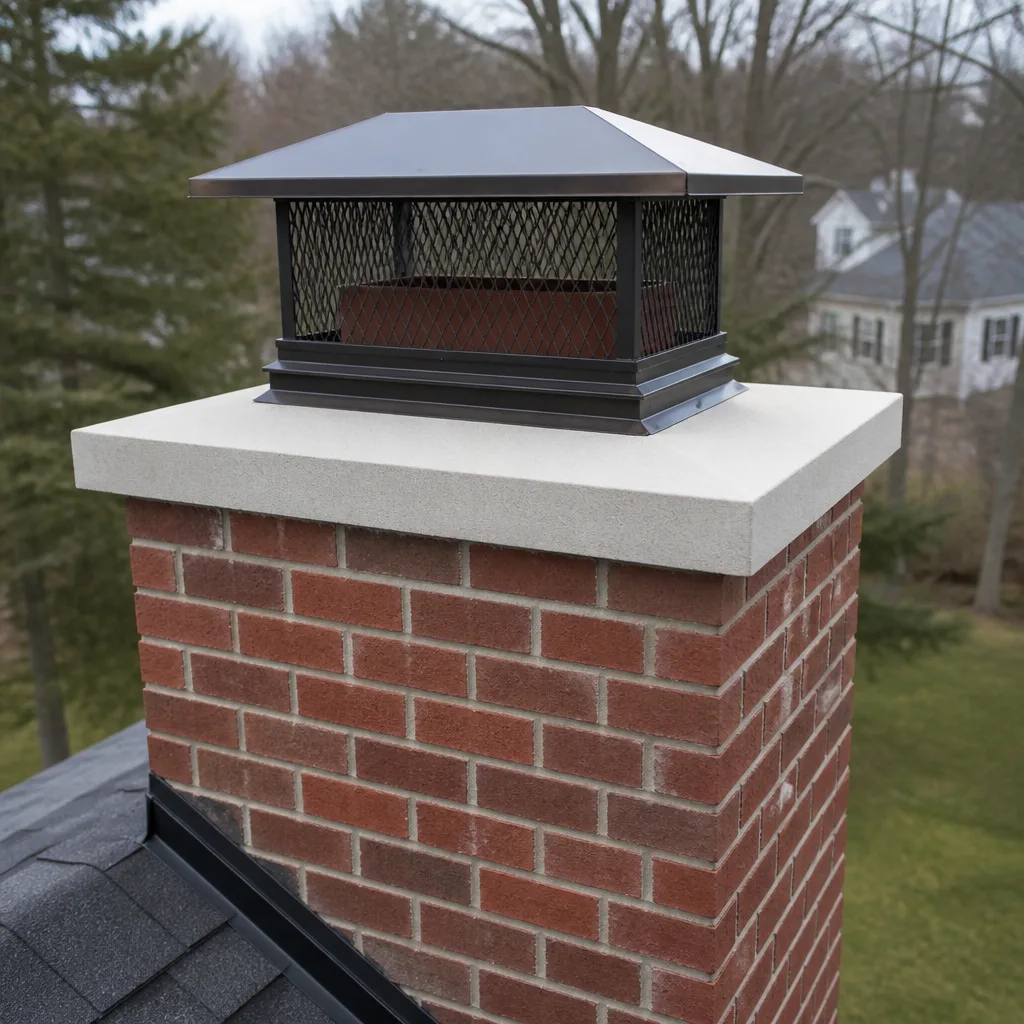
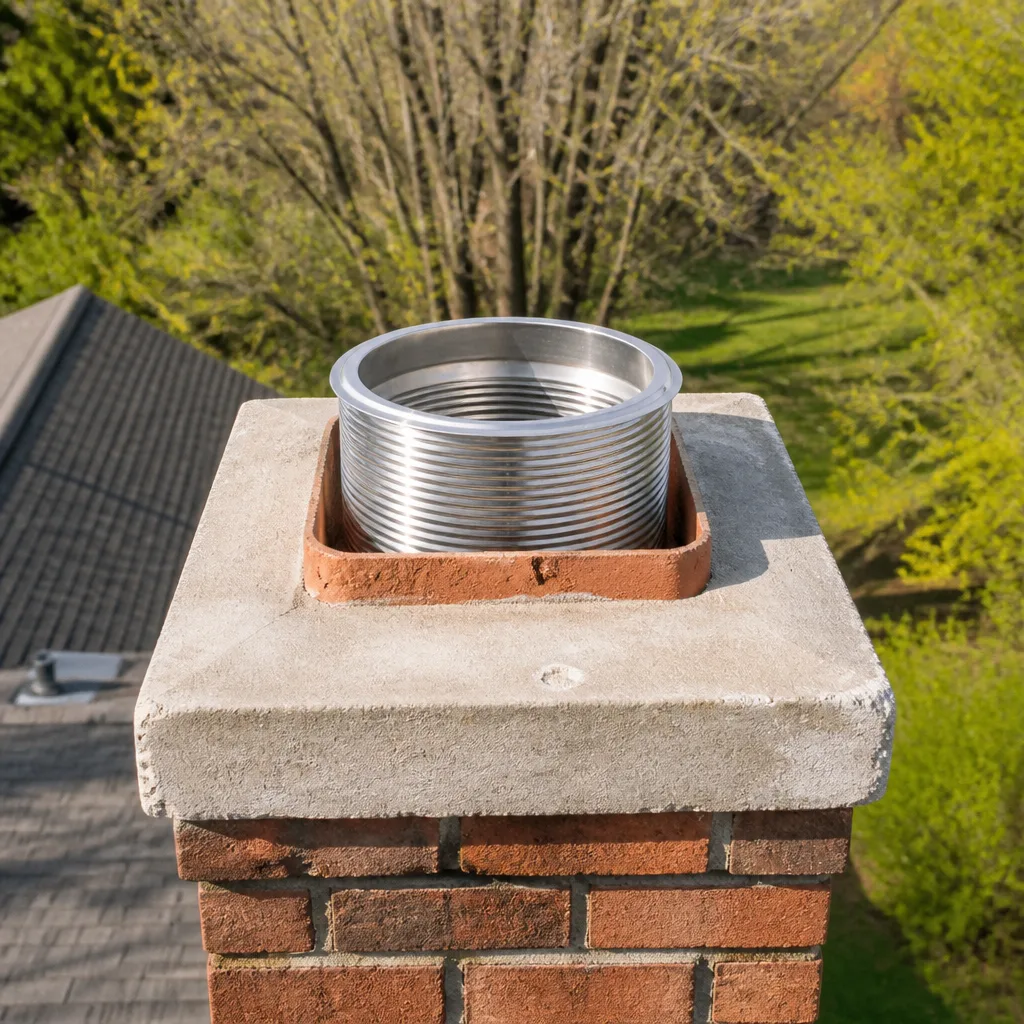
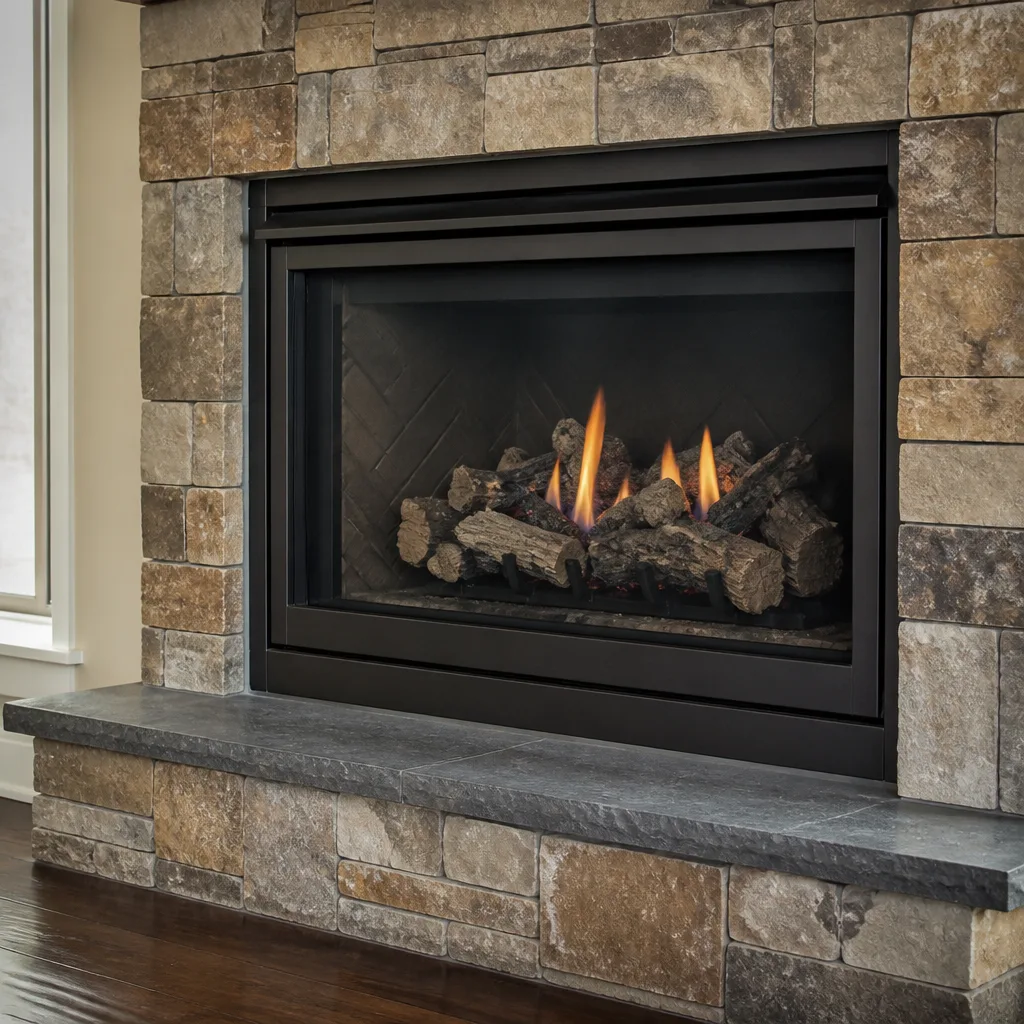
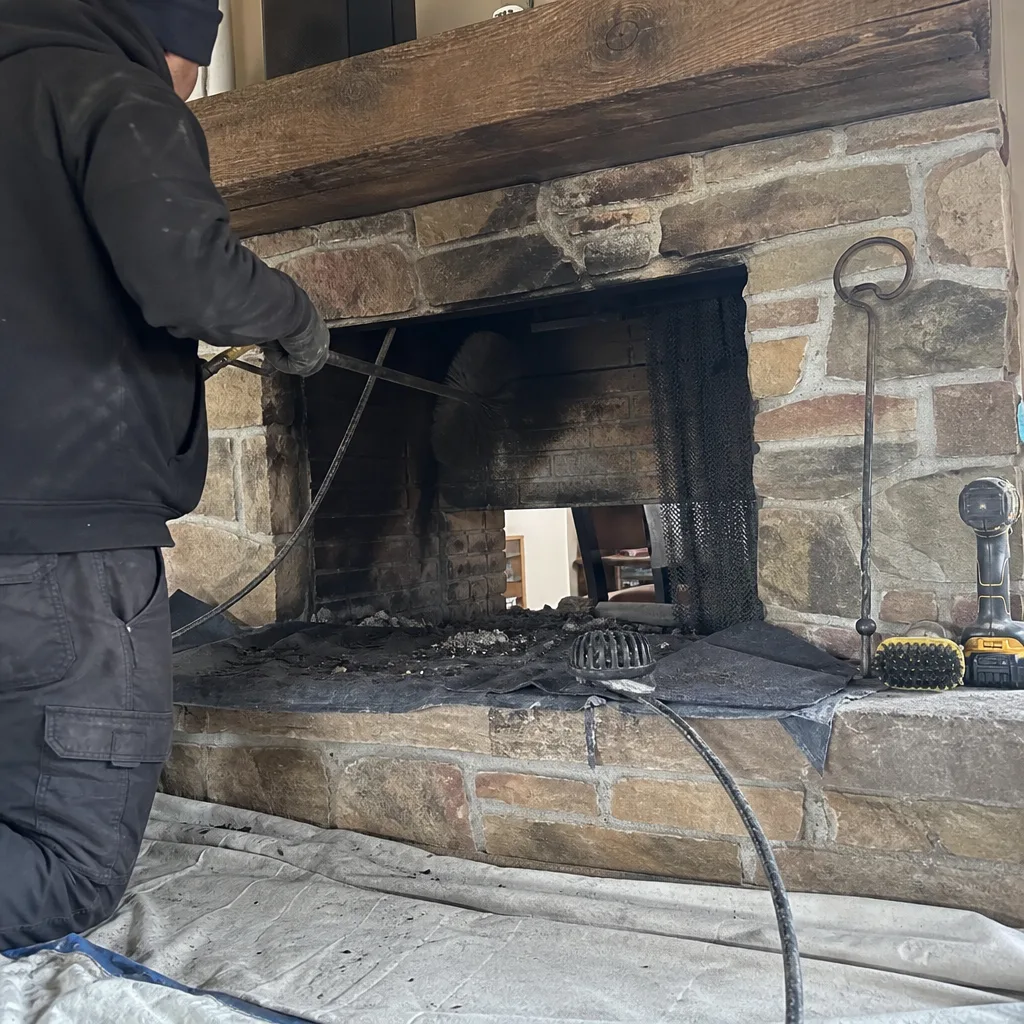 Before
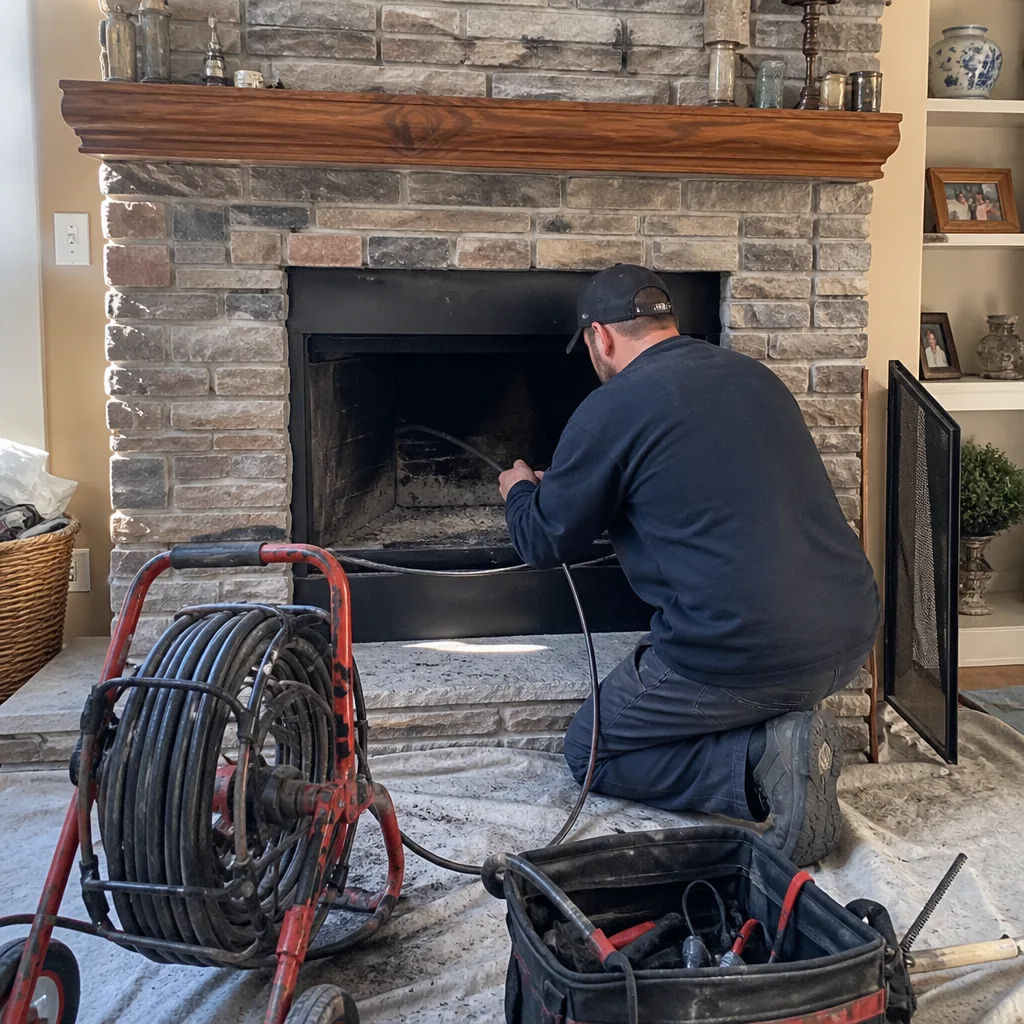 After
After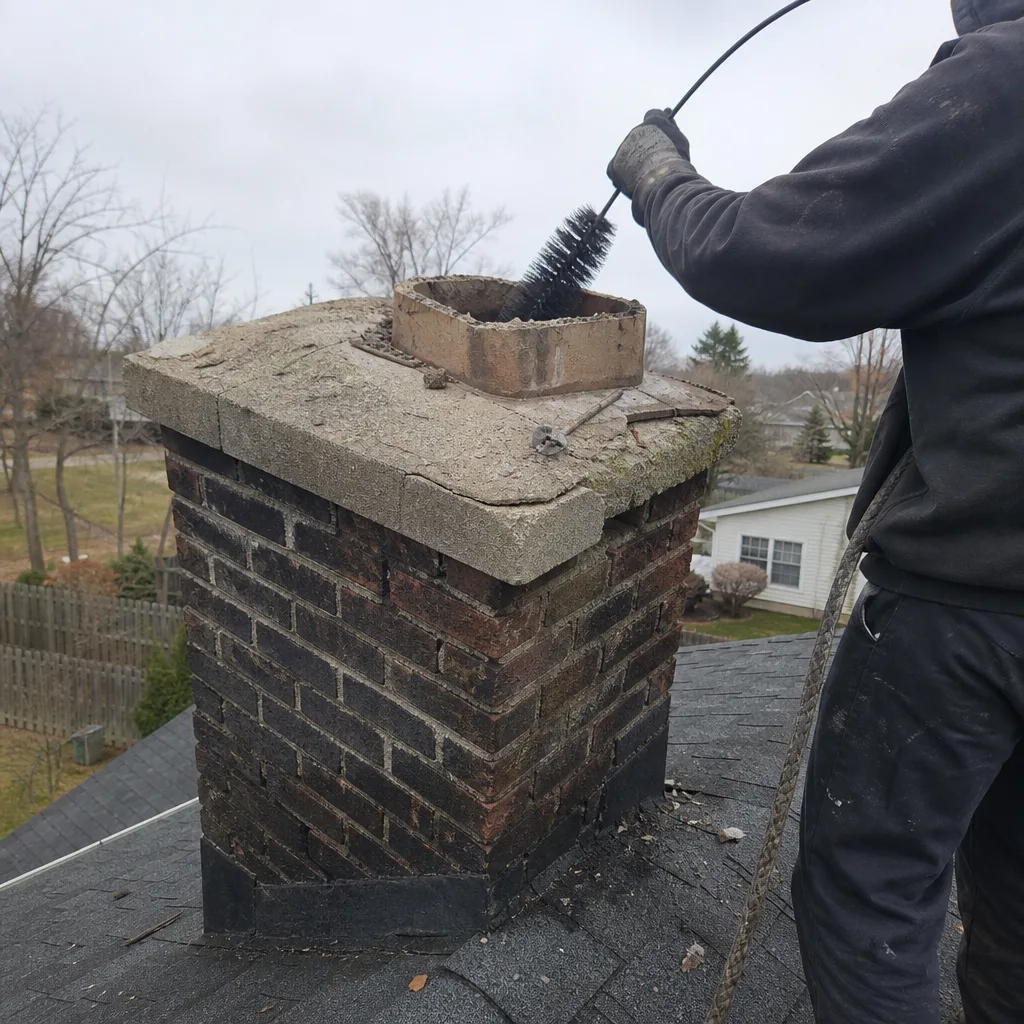 Before
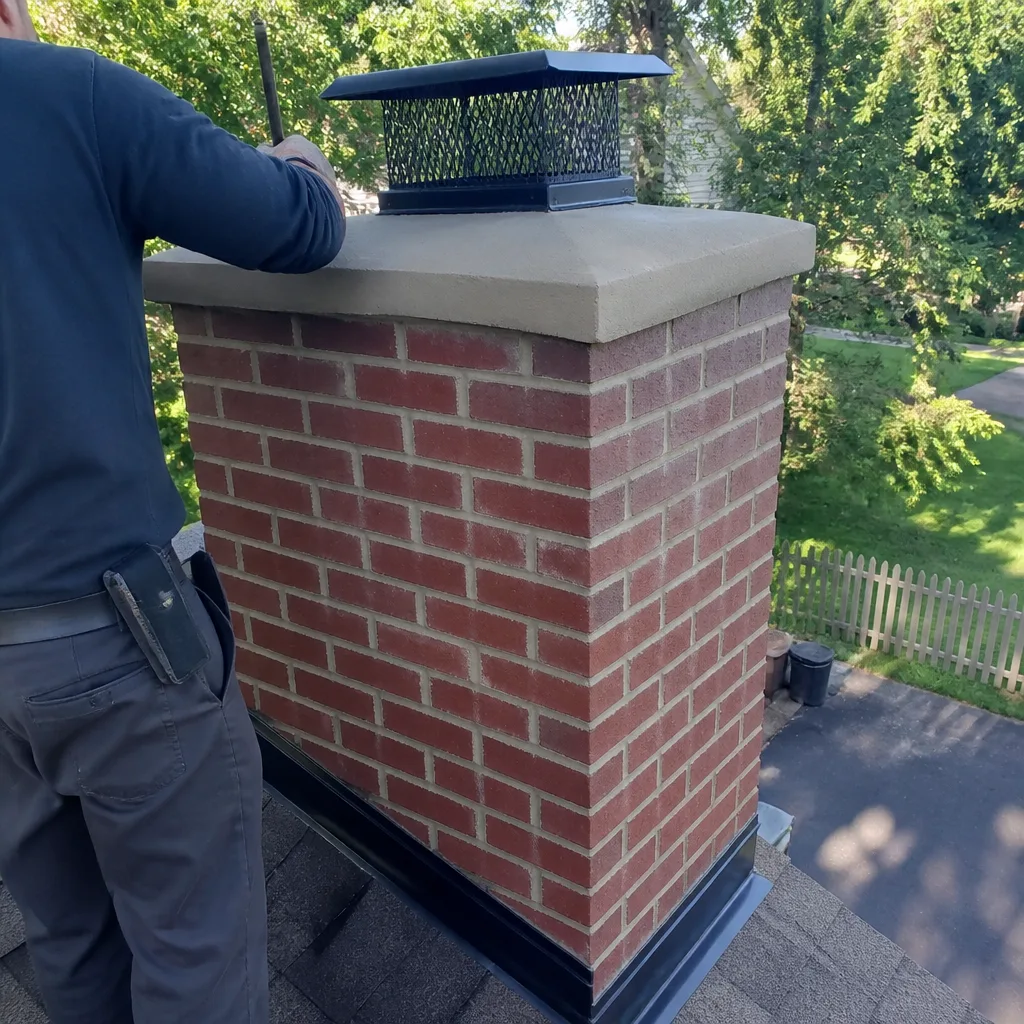 After
After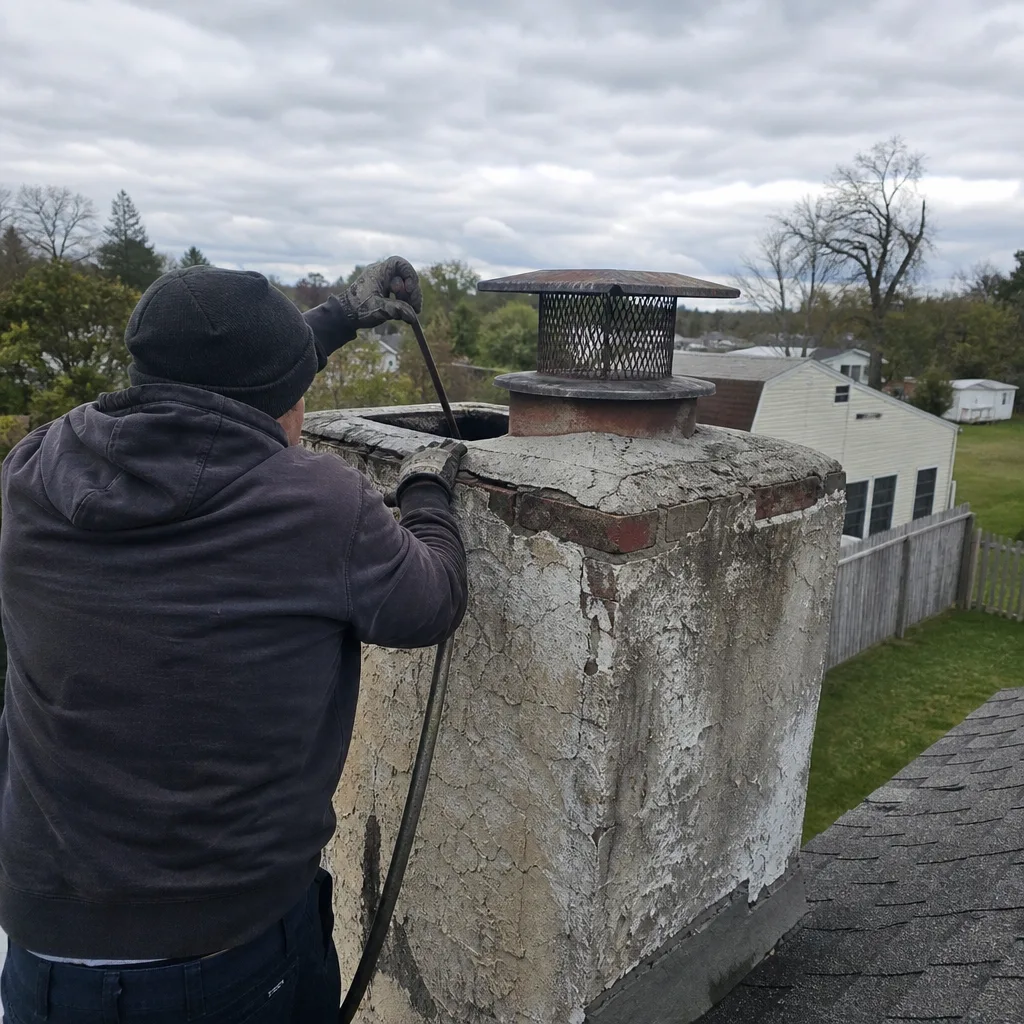 Before
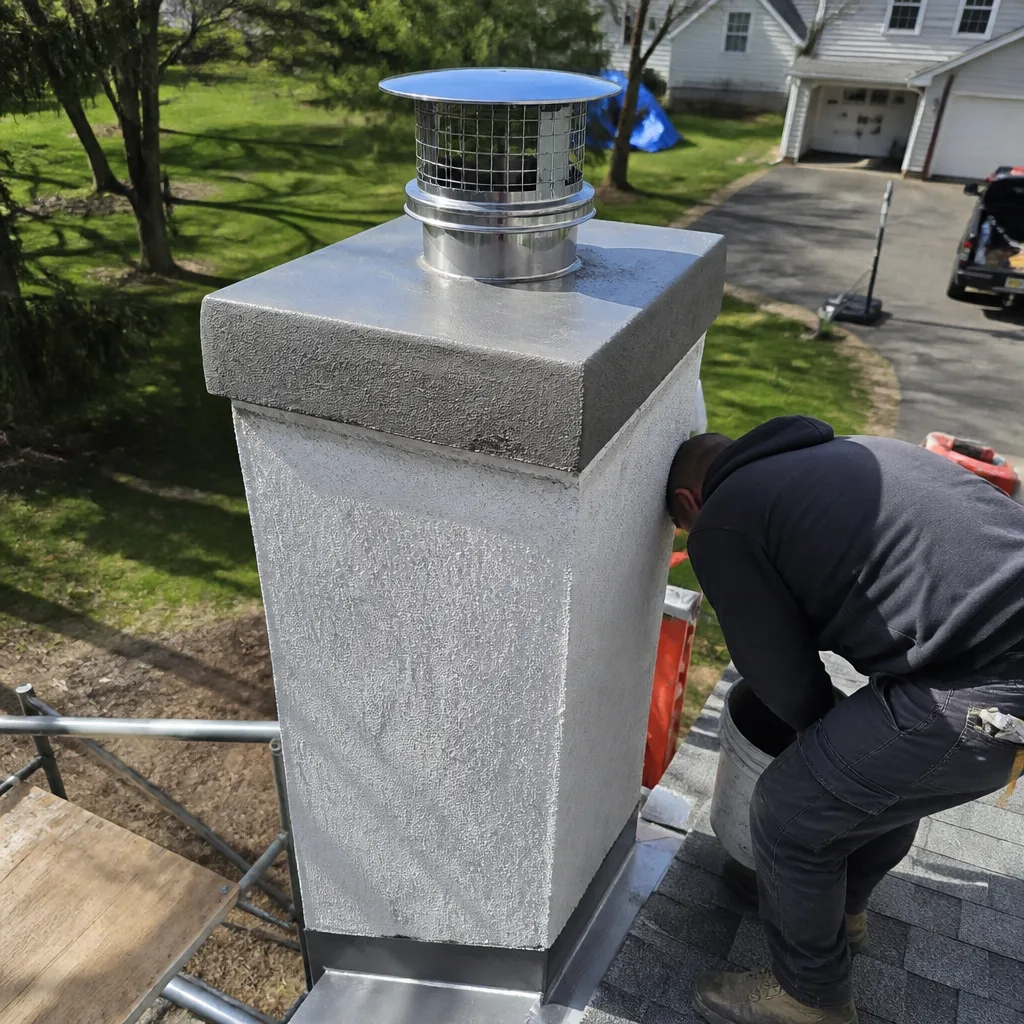 After
AfterChimney Cleaning Warning Signs: A Quakertown Homeowner’s Reference Guide
A white stain on the outside of your chimney is not an emergency. A brown oily stain on the firebox wall above the damper might be. Most The Complete Guide to Chimney Cleaning in Quakertown and other guides throw every symptom at you in one undifferentiated list, which is about as useful as a smoke alarm that goes off when you burn toast. In Quakertown, where homes range from 1800s stone farmhouses to 1980s colonials, the warning signs vary as much as the construction. This guide draws a clear line between “call this week” and “mention it at the next cleaning,” so you can act with judgment instead of panic.
Quick Answer
If you see a brown or black oily glaze on your firebox walls, smell smoke when there’s no fire, or hear animals in the flue, stop using the fireplace and call a sweep within days. White stains on exterior brick, minor rust on the damper, and occasional smoke puffing on windy days are usually watch-and-mention items that belong on your next routine chimney cleaning in Quakertown list, not an emergency call.
Table of Contents
- The Three Tiers: When to Stop, When to Schedule, When to Watch
- Sounds That Are Normal vs. Sounds That Mean Something
- Smoke Behavior: What Backdrafting, Puffing, and Odor Actually Tell You
- Stains and Efflorescence: White Powder vs. Active Water Infiltration
- Why a Clean Firebox Is Not a Safe Chimney
- Creosote: The Warning Sign You Cannot See Without a Camera
- Off-Season Warning Signs: What Breaks When Nobody’s Burning
The Three Tiers: When to Stop, When to Schedule, When to Watch
Every warning sign falls into one of three categories. Misreading a Tier 3 sign as a Tier 1 emergency wastes a service call. Misreading a Tier 1 sign as a Tier 3 curiosity risks a chimney fire. Here is the line, drawn plainly.
Tier 1: Stop Using the Fireplace Today
These signs indicate an active hazard: a creosote accumulation thick enough to ignite, a blockage that is pushing carbon monoxide back into the house, or structural damage that could fail under heat.
- Brown or black oily glaze on the firebox walls. This is third-degree creosote. It is concentrated fuel. A hot fire can ignite it, and once it lights, it burns like a road flare. Stop burning and call a sweep.
- Smoke smell in the house when there is no fire. This means the flue is not drafting. Air is moving down the chimney instead of up, and it’s carrying whatever is in the flue back into your living room. In Quakertown homes with tight windows and added insulation, negative pressure makes this worse.
- Animal sounds coming from the flue. A chirping or scratching sound means a nest. The nest itself is a fire hazard, and the animal is a blockage. Do not try to smoke it out. Call someone who removes animals and the debris they leave behind.
- Visible cracks in the firebox wall with dark staining around them. Heat and combustion gases are escaping through the crack into the surrounding masonry. In older Quakertown stone chimneys, this is more common than most homeowners realize.
- Soot or smoke stains appearing on the wall or ceiling near the chimney chase. Combustion gases are leaking into the house structure, not venting outside. This is a carbon monoxide pathway.
Tier 2: Schedule Within 30 Days
These signs mean the system is degrading but is not an immediate threat. You should book a cleaning or inspection this month, before the next burning season or before a small problem becomes a big one.
- Visible flaky creosote that brushes off the firebox walls easily. First-degree creosote is a brush job. Catch it at this stage and a sweep removes it in one visit. Let it build through another winter and it becomes the glaze described above.
- Rust stains on the damper or firebox floor. Water is entering the flue and pooling at the bottom. The firebox can handle occasional moisture. The damper cannot. Rust means the damper is slowly failing and water is getting past the cap or crown.
- A damper that is stiff, stuck, or won’t fully open or close. A partially open damper wastes heat and pulls more creosote-forming smoke past a restricted opening. A fully stuck damper means the fireplace is effectively unusable until repaired.
- White staining on the exterior chimney brick that appears to be growing or spreading. One season of efflorescence is cosmetic. Two seasons of expanding staining means water is actively moving through the masonry and freezing cycles will accelerate spalling. That is a chimney repair in Quakertown issue, not just a cleaning.
- Chunks of mortar or brick pieces on the ground at the base of the chimney. This is spalling, which in Bucks County freeze-thaw cycles is a matter of when, not if. Small spalls today become missing brick next winter.
Tier 3: Watch and Mention at the Next Routine Visit
These signs are almost always normal operation or cosmetic. They do not justify an emergency call, but they should be noted so the sweep can confirm them during the annual cleaning.
- Light white powder on exterior brick. This is efflorescence: salts in the masonry dissolving and crystallizing on the surface. It is cosmetic and extremely common on Quakertown chimneys that face prevailing winds. It does not mean the chimney is failing.
- A faint smoke odor on the first fire of the season. Dust and debris settle in the flue over the summer. The first fire burns it off. If the smell persists past the second or third fire, it moves to Tier 2.
- Occasional smoke puffing into the room on windy days. Older Quakertown homes with shorter chimneys and nearby trees get draft reversal from wind gusts. If it happens every time you burn, that’s Tier 1. If it happens once in a while during a nor’easter, mention it.
- Morning condensation on the inside of the glass doors. This is warm humid air meeting cold glass. It has nothing to do with the chimney’s structural soundness.
- Black soot that wipes off easily with a dry cloth. Fine, powdery soot on the firebox floor is normal combustion residue. It smears because it’s loose, not because it’s glazed.
Here is the practical takeaway. Our approach in Quakertown has always been straightforward: tell the homeowner which tier they’re in, show them the camera footage that proves it, and let them decide. We’ve turned down plenty of “emergency” calls that were just wind-driven puffing, and we’ve been the second opinion after someone else ignored a Tier 1 glaze for two winters.
Sounds That Are Normal vs. Sounds That Mean Something
Chimneys make noise. Some of it is the house breathing. Some of it is a problem announcing itself. Here is how to tell the difference without climbing a ladder.
Normal Sounds
- Ticking or pinging when the fire starts or dies down. Masonry and metal expand and contract with heat. The tick is the chimney settling back into shape. It is most noticeable in older Quakertown stone chimneys with metal liners, because the liner expands at a different rate than the stone.
- A soft rushing sound when the fire is burning hard. That is draft. Air moving up the flue makes a low continuous sound, similar to a distant highway. It gets louder as the fire gets hotter. That means the flue is doing its job.
- Wind whistling at the chimney top during a storm. Wind moving across the flue opening creates a flue-whistle effect, like blowing across a bottle. A properly sized cap with a screen usually eliminates it. It is not a structural concern.
- Rain spattering on the damper plate. If the damper is metal and the flue is open, rain falling at the right angle will hit the damper and echo down. A cap eliminates most of this. The sound itself is not dangerous, but it does mean water is entering the flue.
Sounds That Require Investigation
- Scratching, scurrying, or chirping that changes with the time of day. That is an animal in the flue. Chimney swifts, squirrels, and raccoons are all common in Quakertown. The sound has a rhythm to it: quiet during mid-day when the animal is out, active at dawn and dusk. Animal removal plus a proper cap is the fix.
- A dull fluttering or thumping sound on windy days. That is often a loose chimney cap or a warped damper plate flapping in the wind. It’s metal on metal. Left alone, the hardware can work loose and fall into the flue, which becomes a blockage.
- A sharp cracking sound from the firebox during an active fire. A single sharp crack is usually a refractory panel or a brick releasing built-up stress. Multiple cracks over time mean the firebox panels are failing. The firebox is now structurally compromised and heat is reaching the masonry shell behind it.
- A whistling sound during an active fire that changes pitch when you move the damper. This indicates an airflow restriction, often a partially closed damper or a flue obstruction. The flue is drawing through a narrow opening, and the whistle is the sound of restriction. It is worth an inspection.
We’ve been in enough Quakertown chimneys to recognize a chimney swift’s nesting pattern versus a squirrel’s hoard before the camera even reaches the flue. The sound tells you what you’re going to find. But the camera always comes out, because the sound alone is not enough to make a recommendation.
Smoke Behavior: What Backdrafting, Puffing, and Odor Actually Tell You
Your fireplace communicates through smoke. Most homeowners know to watch for smoke pouring into the room, but the subtler behaviors are the early warning system. In Quakertown, where many homes have been retrofitted with newer windows, added insulation, and kitchen exhaust fans, the physics of drafting have changed. A chimney that pulled fine in 1999 may struggle in the same house in 2026, because the house is now tighter and the chimney is now competing with a clothes dryer and a range hood for available air.
Backdrafting: Smoke That Pours Into the Room
When you light a fire and smoke billows out instead of going up the flue, the chimney has formally lost the draft contest. The warm air in the room is rising up the chimney, or the pressure inside the house is lower than the pressure outside, and the flue becomes a fresh-air inlet instead of an exhaust outlet. This is the one smoke behavior that is always serious. Stop using the fireplace and call a sweep. The cause can be anything from an animal nest to a collapsed flue liner to a simple case of the upstairs bathroom fan running while the fire starts.
Intermittent Puffing: Smoke That Comes and Goes
Puffing looks like the fire is breathing smoke into the room in short bursts. It usually happens on windy days, when a gust hits the chimney top and momentarily reverses the draft. A cap with the right baffling often solves it. But if puffing happens on calm days, the flue’s draft strength is marginal. This is common in Quakertown homes with short chimneys or chimneys built on the downwind side of the roof. The fix may be a taller flue, a better cap, or a cleaning that removes a partial restriction. Do not ignore intermittent puffing indefinitely: a marginal draft is one degree away from a backdrafting chimney when conditions change.
Odor Without Visible Smoke
Smell is airborne chemistry. If you smell smoke in the house when there is no fire, the flue is delivering combustion byproducts back into the living space. This happens most often in summer, when the air inside the house is cooler and denser than the air outside, and the chimney becomes a conduit for outdoor air moving downward into the house. The smell is creosote inside the flue. The fix is usually a cleaning to remove the creosote odor source, plus a cap or a top-sealing damper to reduce the downward airflow. If you smell smoke only when you run the kitchen exhaust fan or the dryer, the house is going negative and pulling air down the chimney. It is a venting issue, not a chimney defect, but the solution often involves chimney work anyway.
Your flue doesn’t care how the fire looks. It cares how it breathes. Smoke behavior tells you whether it is breathing or suffocating.
Stains and Efflorescence: White Powder vs. Active Water Infiltration
Two different white stains appear on chimneys, and confusing them is the most common misdiagnosis in the Quakertown area. One is harmless chemistry. The other is water actively eating your masonry. Here is how to tell them apart from the ground, before you call anyone.
Efflorescence: The Harmless White Powder
Efflorescence is a powdery white film that appears on the outside of the brick. It forms when water inside the masonry dissolves the natural salts in the brick and mortar, then migrates to the surface and evaporates, leaving the salt behind. It looks like a thin chalk dusting. It brushes off with a finger. It is most visible on the lower sections of the chimney and on faces that get direct sun, because the sun accelerates evaporation.
Efflorescence is cosmetic. It does not weaken the brick. It does not mean the chimney is failing. On Quakertown chimneys built with older lime mortar, some efflorescence is almost inevitable in the first few years after a rebuild, as the mortar cures and releases its salts. If the powder appears, do not panic-call a mason. Wipe it away, keep an eye on it, and mention it at your next fireplace service in Quakertown visit.
Active Water Infiltration: The Stain That Means Something
Active water infiltration leaves different signatures. Look for these instead of the chalky powder:
- Dark, wet-looking patches that persist for days after rain. Efflorescence is dry and chalky. Active infiltration looks damp, like the brick is sweating. The stain is often darker than the surrounding brick and stays visible long after the weather clears.
- Green or black mold streaks on the chimney face. Moss and mildew grow where water lingers. If the north face of your Quakertown chimney has a green tint, water is sitting in the masonry joints for long stretches, not just passing through.
- White staining that accumulates in vertical stripes under a crack. Efflorescence spreads evenly. Water staining follows a path. A vertical white streak under a cracked crown or a failed cap joint is water channeling through a specific opening.
- Stains on the interior wall or ceiling near the chimney chase. Water that gets inside the masonry can travel horizontally along framing and show up as a damp patch on a bedroom wall. This is water breaching the chimney’s outer envelope, and it is not cosmetic.
Active water infiltration is a Tier 2 issue in most cases. It should be addressed within the month, before the freeze-thaw cycles of a Quakertown winter turn a damp joint into a spalled brick. The exact repair depends on what the camera and a roof inspection find: a failed crown, a cracked cap, missing flashing, or worn mortar joints. The fix is specific, and a good sweep will show you the evidence on camera before recommending any repair.
Why a Clean Firebox Is Not a Safe Chimney
A homeowner who cleans the firebox and glass doors after every fire may be looking at the safest-looking fireplace in Quakertown and the most dangerous flue on the street. The firebox is the part of the system you can see. The flue is the part that kills you if it fails. They are not the same thing.
When you burn a fire, combustion byproducts rise and cool as they move up the flue. The outside of the chimney is cold, especially in a Quakertown January. The hot gases hit the cold flue wall and condense, forming creosote. This process happens the entire height of the flue, not in the firebox. The firebox is hot enough to burn off most of what lands there. The upper third of the flue, where the chimney pokes above the roof, is the coldest part of the system and the most common place for heavy creosote buildup in our area. That is also the part you cannot see without a camera, from either the roof or inside.
We have found flues in Quakertown that were 80% blocked at the top with first-degree creosote and a squirrel’s nest, while the firebox below was immaculate. The homeowner had been burning fires all winter and watching the flames through clean glass, with no idea the chimney was one hot ember away from a flue fire.
A clean firebox tells you one thing: the part of the system you can see is clean. It tells you nothing about the part of the system that moves combustion gases out of your house. The only way to know what’s inside the flue is to run a camera up it. Doing a visual inspection from below, with a flashlight and a mirror, is like checking your oil by looking at the dashboard. We run the camera on every visit, no exceptions, and the footage goes to the homeowner with a plain-English verdict. The camera doesn’t lie, and neither do we.
Creosote: The Warning Sign You Cannot See Without a Camera
Creosote is the single most important warning sign in a wood-burning chimney, and it is the one you will never see from your living room. Understanding how it forms and what the three stages mean tells you exactly what you’re up against.
What Creosote Is and How It Forms
When wood smoke rises and cools, the unburned combustion byproducts condense on the flue wall. The factors that accelerate creosote formation: burning unseasoned wood, restricting the air intake, burning at low temperatures, and a flue that is oversized for the appliance. In Quakertown, where many older homes have oversized flues originally built for coal or larger wood stoves, the modern fireplace or insert often produces cooler, slower-moving smoke than the flue was designed to handle. The result is creosote accumulation faster than the original builders ever saw.
First-Degree Creosote: Dust and Flakes
First-degree creosote is fine, powdery, and flaky. It brushes off the flue wall easily. This is what a routine sweeping removes. Left alone, it becomes a seed bed for the next layer to stick to. First-degree creosote is a Tier 2 concern: schedule a cleaning within 30 days of noticing it, which means most Quakertown homeowners see it once a year, during the annual cleaning, exactly when they should. First-degree creosote is a brush job. Third-degree is a glaze. Catch it early.
Second-Degree Creosote: Crunchy and Bumpy
Second-degree creosote looks like dried coffee grounds stuck to the flue wall. It has a crunch to it. It is harder to remove than first-degree, but a good sweep with the right brushes and rods can clear it in most cases. This stage is where we start seeing it in Quakertown flues that have gone two seasons between cleanings, or where the homeowner has been burning green wood. It is still safely removable, but it is getting close to the point where brushing alone is not enough.
Third-Degree Creosote: The Glaze
Third-degree creosote is a dense, shiny, tar-like glaze. It looks like a layer of black glass on the flue wall. It forms when second-degree creosote is repeatedly heated and condensed without being removed, or when a chimney fire has already occurred and baked the creosote into a hard glaze.
Third-degree creosote cannot be brushed off. It has to be removed chemically or mechanically, often using products like the creosote-removal systems from Famco or Gelco, which treat the glaze and break it down so it can be swept. In severe cases, a rotary cleaning with chains is required. Third-degree creosote is the reason chimneys catch fire: it is concentrated, hardened fuel adhered to the flue wall. A hot fire or a stray ember ignites it, and the resulting chimney fire can hit 2,000 degrees. The flue liner cracks, the mortar fails, and in the worst cases the fire spreads to the house frame.
If you or anyone else has seen a brown oily glaze on the firebox wall above the damper, that is third-degree creosote showing itself at the bottom of the flue. It is a Tier 1 sign. Stop burning and call a sweep. The good news is that glazed creosote can almost always be removed without replacing the liner, if it is caught before a fire bakes it into the flue wall and cracks the tile.
Off-Season Warning Signs: What Breaks When Nobody’s Burning
Chimneys break when nobody is watching. Most Quakertown homeowners think about their chimney in October, when the first cold night arrives, and stop thinking about it in April. But the damage happens in the off-season: the summer thunderstorms, the spring thaw cycles, the fall windstorms, and the animals looking for a warm dark place to nest.
What to Check in the Off-Season, From the Ground
- After a heavy rain, walk around and look at the chimney from all four sides. Note any dark wet patches, new efflorescence, or streaks that were not there before. Water entry in the summer becomes spalling in the winter.
- After a windstorm, check the ground around the chimney for any pieces of mortar, brick, metal flashing, or cap fragments. Wind loosens what water has already weakened. What falls off in August was already failing in May.
- Listen for animals at dawn or dusk near the chimney. Squirrels and raccoons are most active during these hours, and Chimney Swifts return to Quakertown in the spring. A screen-free cap is an open door.
- Shine a bright flashlight up the flue from the firebox. You will not see much, but you can sometimes spot a fallen flue tile, a visible nest, or a buildup of debris. If you see anything that did not used to be there, that’s a call-or-watch decision.
- Check the damper. Open and close it a few times. If it is stiffer than last season, water has probably gotten to the mechanism. If it is stuck, do not force it: you can bend the plate or break the handle.
Once a year, burn or no burn. Chimneys break in the off-season too. That is not a slogan; it’s the mechanical reality of a masonry structure sitting on your roof through a Bucks County weather cycle. The off-season inspection costs less than the repair you will need if the off-season did its work unnoticed for two or three years running.
Common Mistakes to Avoid
- Treating every smoke puff as an emergency. A single puff on a windy day is a draft issue, not a defect. Burning out of a panicked call for every minor draft hiccup trains you to ignore the real warnings.
- Ignoring a Tier 1 sign because the firebox looks clean. The firebox is one visible part of a system that runs from the grate to the cap. The flue is where the dangerous accumulation happens, and it is invisible from below.
- Burning pine or scrap lumber because it’s free. Softwoods and construction lumber produce heavy creosote and burn hot enough to stress an older Quakertown flue. Seasoned hardwood burns cleaner and safer.
- Using the fireplace as a primary heating source in a home built for a furnace. Fireplaces are designed for intermittent use. Running one 12 hours a day, every day, through a Quakertown December, is beyond what most residential flues were built to handle. That is how you get glazed creosote in one season.
- Climbing on the roof for a DIY inspection without a harness and a spotter. Falls from roofs are a leading cause of homeowner injury. If you cannot inspect safely from the ground or from inside, leave the ladder alone and call a sweep who carries the right equipment and insurance.
- Trusting a phone quote for chimney work without a camera inspection. Any number quoted before someone sees inside the flue is a guess. A good sweep gives you footage and a written explanation before discussing repairs. If a company quotes you a liner replacement without ever putting a camera up the flue, get a second opinion.
- Assuming that because the previous owner said the chimney was fine, it is. Previous owners say a lot of things. The previous owner also painted over the water stain on the bedroom ceiling. Trust the camera, not the story.
When to Call a Professional
Call a sweep when you see a Tier 1 sign and stop using the fireplace that same day. Call when a Tier 2 sign has been visible for more than a week and you know you will not get to it unless it’s on the calendar. Call when you’ve bought a house and have no idea what the previous owner did with the chimney. Call when you’re not sure which tier you’re in. The honest answer is often “that can wait,” and you should get that answer from someone who makes a living running cameras up flues, not from a stranger on the internet. The camera footage and a plain-English verdict, every time, no exceptions. Top Hat Chimney offers free estimates in Quakertown. Call (484) 603-6713 and Wendell or his crew will tell you whether it’s a today problem, a this-month problem, or a mention-it-next-year problem.
Frequently Asked Questions
A standard chimney cleaning and inspection in the Quakertown area typically runs between $150 and $300, depending on the height of the chimney, the type of liner, and how much creosote has built up, as detailed in How to Hire a Chimney Cleaning Contractor in Quakertown: A Step-by-Step Guide. Heavier glazed creosote removal or animal nest removal adds to the price, but you will hear that number before any work starts, never after. Call (484) 603-6713 for an exact quote. Estimates are free.
Once a year, whether you burn or not. If you burn more than a cord and a half of wood in a season, or if you burn softwoods or less-than-perfectly-seasoned wood, you may need two cleanings a year. The annual visit also catches off-season damage, animal entry, and water infiltration before they become structural problems.
Creosote builds up inside the flue. That buildup narrows the passage, reduces draft, and eventually becomes fuel for a chimney fire. The same buildup also traps moisture, which accelerates liner deterioration. Skipping a year is not a gamble most Quakertown homeowners should take with a masonry chimney that is already 40 or 80 or 150 years old. If you skip one year, do not skip the second.
Sometimes you need a new liner. Sometimes you need a cleaning, and after the cleaning the liner is fine. You will never know which is true until a camera goes up the flue. We use DuraFlex and Olympia Chimney liner systems when a replacement is genuinely required, but we do not recommend one without footage that shows the existing liner’s condition. If a company quotes you a liner without a camera inspection, that is not an inspection; it is an estimate built on guesswork. You can always ask for a free second opinion on any written estimate.
Stop using the fireplace. Do not smoke it out, and do not try to remove the animal yourself. The animal is blocking the flue, and the nest it is building is combustible material in the exact spot where fire wants to go. Call a chimney professional who handles animal removal and will also recommend and install a proper cap so the problem does not return the next season.
You can check for the visible signs from the ground: falling mortar, dark staining, animal activity, cap damage, and anything that looks different from last season. What you cannot check from the ground is the inside of the flue, the damper mechanism, and the crown. That requires a roof-level inspection or a camera run from below. Most Quakertown homeowners should do the ground check each season and let a sweep do the rest.
The Bottom Line
Warning signs are only useful if you know what they are warning you about. The white powder on your brick is not an emergency. The brown glaze on your firebox wall is. The scratching in the flue is not a wind sound. The smoke that puffs once on a windy day is not a backdraft. Know the tier, know the sign, and know when to say “that can wait” with confidence. That is the judgment a homeowner needs, and it is the judgment we have been giving Quakertown homeowners since 1999. For more guides & resources, visit our blog. When you are not sure which tier you’re in, call (484) 603-6713. The camera will tell you the rest.
Written by Wendell Pike, Owner at Top Hat Chimney, serving Quakertown since 1999.